Warm Up Your Basement: Tips for Toasty Floors
Why Cold Basement Floors Happen (And How to Fix Them)
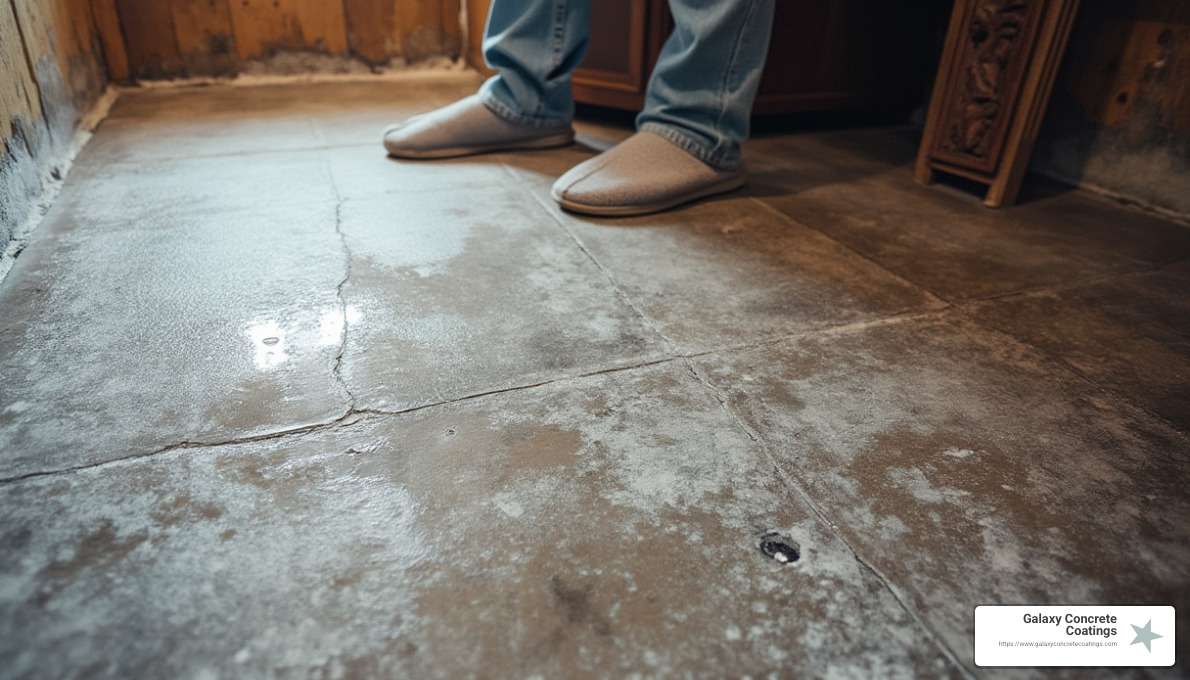
Stepping onto your basement floor in winter can feel like walking on an ice rink – in socks! If you’re tired of tiptoeing across frigid concrete, you’re not alone. Let’s talk about cold basement floor solutions that actually work:
For lower-level spaces, basement floor coatings can help create a cleaner, more finished surface.
| Solution Type | Options | Effectiveness | Cost |
|---|---|---|---|
| Quick Fixes | Area rugs, slippers, portable heaters | Low-Medium | $ |
| Insulation | Rigid foam, insulated panels, cork underlayment | Medium-High | $$ |
| Flooring | Cork, carpet with pad, polyaspartic coatings | Medium-High | $$-$$$ |
| Heating | Radiant floor heat, baseboard heaters, HVAC adjustments | High | $$$-$$$$ |
| Moisture Control | Dehumidifier, vapor barriers | Medium | $$ |
We’ve all been there – you spend thousands turning your basement into the perfect entertainment space or home office, only to avoid it half the year because the floor feels like you’re standing directly on the North Pole. Cold basement floor solutions range from simple weekend projects to more involved upgrades, but they all tackle the same basic problem: concrete naturally pulls heat away from your feet and into the earth below.
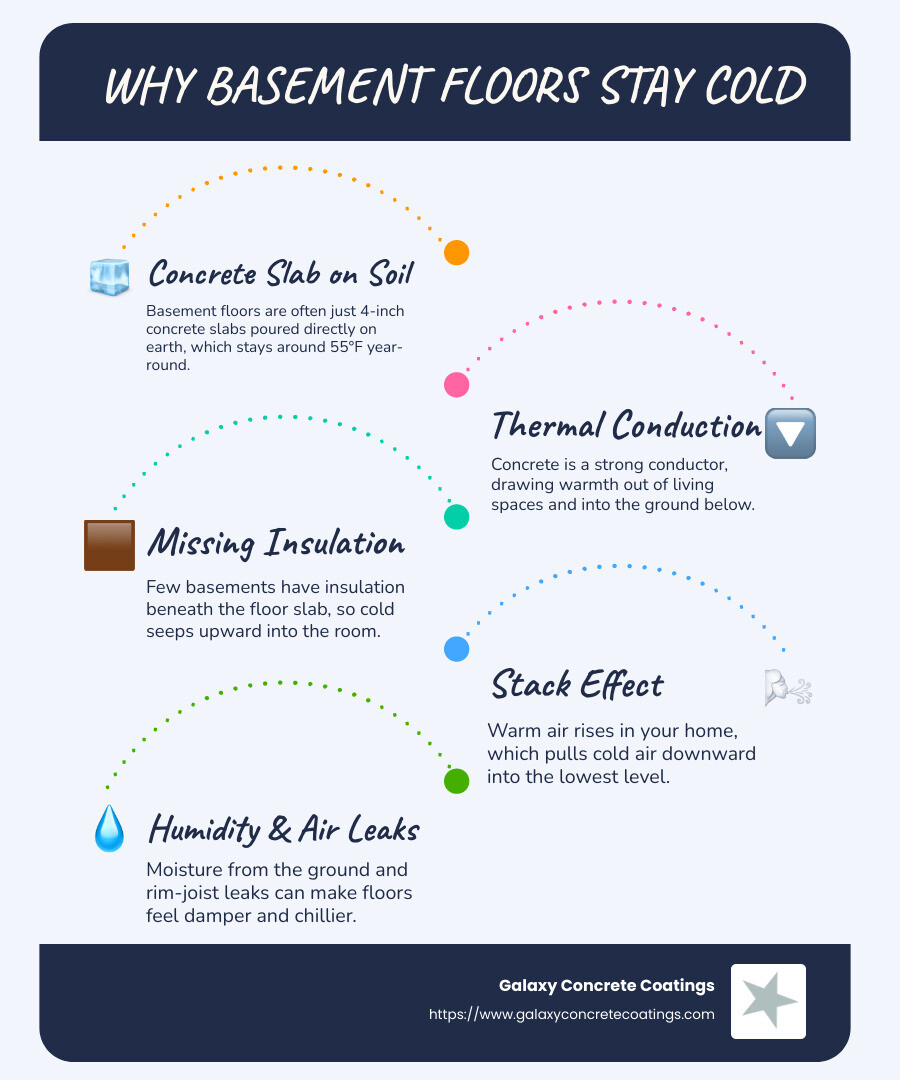
Why do basement floors stay so stubbornly cold? The science is pretty straightforward. Most basements feature a 4-inch concrete slab poured directly against soil that maintains a steady 55-60°F temperature year-round. This creates a massive heat sink that continuously draws warmth from your home downward. Add to this the lack of insulation between your slab and the earth, and you’ve got a recipe for perpetually chilly feet. The “stack effect” (where warm air naturally rises) means cold air settles at basement level, making the problem even worse.
The discomfort is just the beginning. Those cold floors can boost your energy bills by 25-40% as your heating system works overtime to compensate. Worse, when warm, humid air meets those cold surfaces, condensation forms – creating the perfect breeding ground for mold and mildew. But don’t worry – whether you’re looking for a quick fix or a permanent solution, there’s an option for every budget and skill level.
Hi there! I’m Hayley Shahbazi, Manager at Galaxy Concrete Coatings and a specialist in residential concrete floor solutions. I’ve helped countless homeowners solve their cold basement floor challenges with our advanced polyaspartic coating systems. These coatings not only look beautiful but also provide insulating properties that traditional epoxy can’t match – making them both more durable and more comfortable underfoot.
Why Basement Floors Stay Cold
Ever wondered why your basement floor feels like you’re walking on ice even when the rest of your home is toasty? You’re not alone. Understanding the science behind those cold floors is your first step toward finding effective cold basement floor solutions.
Think of your basement floor as a giant cooling pad. Unlike the rest of your home, it’s in direct contact with the earth below, which acts like a massive heat magnet. The U.S. Department of Energy estimates that 25-40% of your home’s heating energy can escape through basement air leaks and cold surfaces. That’s a lot of wasted money just disappearing into the ground!
“I’ve seen homeowners crank their thermostats to 80 degrees upstairs while their basements hover at a chilly 55,” says home improvement expert Bryan Baeumler. “The soil beneath your home is essentially a giant heat sink, constantly pulling warmth away from your living space.”
The Science Behind Concrete & Soil Heat Sink
Your typical basement floor is a 4-inch concrete slab that excels at one thing: conducting heat. Unfortunately, it’s conducting that heat in the wrong direction—away from your warm feet and into the cool earth below.
Heat always moves from warmer areas to cooler ones, and the ground beneath your home maintains a steady temperature of around 55°F year-round in most regions. This creates a one-way street for heat loss: your body heat (98.6°F) transfers to the floor, the concrete slab conducts it downward, and the soil absorbs and disperses it.
What makes matters worse is concrete’s relationship with moisture. Even when your basement seems dry, concrete naturally contains microscopic amounts of water that increase its thermal conductivity. This is why basement floors often feel much colder than the actual air temperature in the room—they’re literally pulling heat from your body through a process called radiant cooling.
When warm, moist air in your basement meets these cold surfaces, it often reaches the dew point—the temperature at which moisture condenses. This not only makes your floors feel colder but creates the perfect environment for unwanted moisture problems.
Comfort, Health & Efficiency Impacts
Cold basement floors affect more than just your comfort—they impact your health, home, and wallet in significant ways:
Your body feels it first. Cold floors can trigger foot and ankle discomfort, worsen joint pain (especially for those with arthritis), and create an overall chill that makes your finished basement practically unusable during colder months.
Your home’s health suffers too. When warm air meets cold surfaces, condensation forms, creating ideal conditions for mold and mildew growth. This can degrade indoor air quality and trigger allergies or respiratory issues for sensitive family members.
And then there’s your energy bill. Cold basement floors force your heating system to work overtime. Many homeowners resort to space heaters, which can cost $30-$60 per month in electricity. Meanwhile, your main heating system runs longer and more frequently, trying to overcome the cold air pool that forms at floor level.
“The majority of homeowners I work with don’t realize that properly insulating their basement walls to just R-10 can save between $250-$400 annually on heating costs,” notes professional contractor Steve Maxwell. “Nobody wants a musty smell in the house, and that’s often directly related to cold basement floors creating condensation points.”
Perhaps most surprising: according to NAIMA.org, a shocking 90% of U.S. homes are under-insulated. This means most homeowners are paying more for heating while remaining less comfortable than necessary.
The good news? Once you understand why your basement floor stays cold, you can take targeted steps to fix it. From simple DIY cold basement floor solutions to professional upgrades, there are options for every budget and skill level. In the following sections, we’ll explore the most effective ways to transform your basement from an ice box to a comfortable living space.
Best Cold Basement Floor Solutions
Let’s face it – that cold basement floor isn’t going to warm itself up! Now that we understand why your toes feel like ice cubes down there, let’s explore cold basement floor solutions that actually work. Whether you’ve got $50 or $5,000 to spend, there’s a fix that can transform your basement from freezer to cozy retreat.
Quick, Low-Cost Cold Basement Floor Solutions
Not ready for a major renovation? I get it. Here are five affordable fixes that can make a noticeable difference without breaking the bank:
Area rugs with thick padding create an instant buffer between your feet and that icy concrete. I’ve seen homeowners layer multiple rugs for extra insulation – not the prettiest solution, but effective in a pinch! Carpet tiles offer another flexible option since you can install them directly on concrete and replace individual tiles if they get damaged.
Those gaps around basement doors and windows? They’re basically inviting cold air to your floor party. For under $20 per door, weather stripping and door sweeps can block these drafts and make a surprising difference in how the whole space feels.
Humidity plays a huge role in comfort too. When I installed a dehumidifier in my own basement, the difference was immediate – not just in temperature but in that damp, clammy feeling that makes cold floors feel even worse. Aim for 35-50% relative humidity for the sweet spot of comfort without creating condensation issues.
For basements with windows, thermal curtains are worth every penny. They prevent cold air from radiating into the room and can make the entire space feel warmer for just $20-50 per window.
Sometimes the problem isn’t lack of heat but poor circulation. Warm air naturally rises, leaving your floors in the cold zone. A simple ceiling fan set to winter mode (clockwise) pushes that warm air back down where you need it.
As one of my customers joked: “The REALLY cheap option? Invest in some really nice slippers!” While not a permanent solution, a good pair of house slippers with thick soles can make your basement usable while you plan more substantial improvements.
Subfloor & Insulation Upgrades
For a solution that actually tackles the root cause, you’ll want to create insulation between your concrete slab and finished flooring. This makes a dramatic difference in how the floor feels.
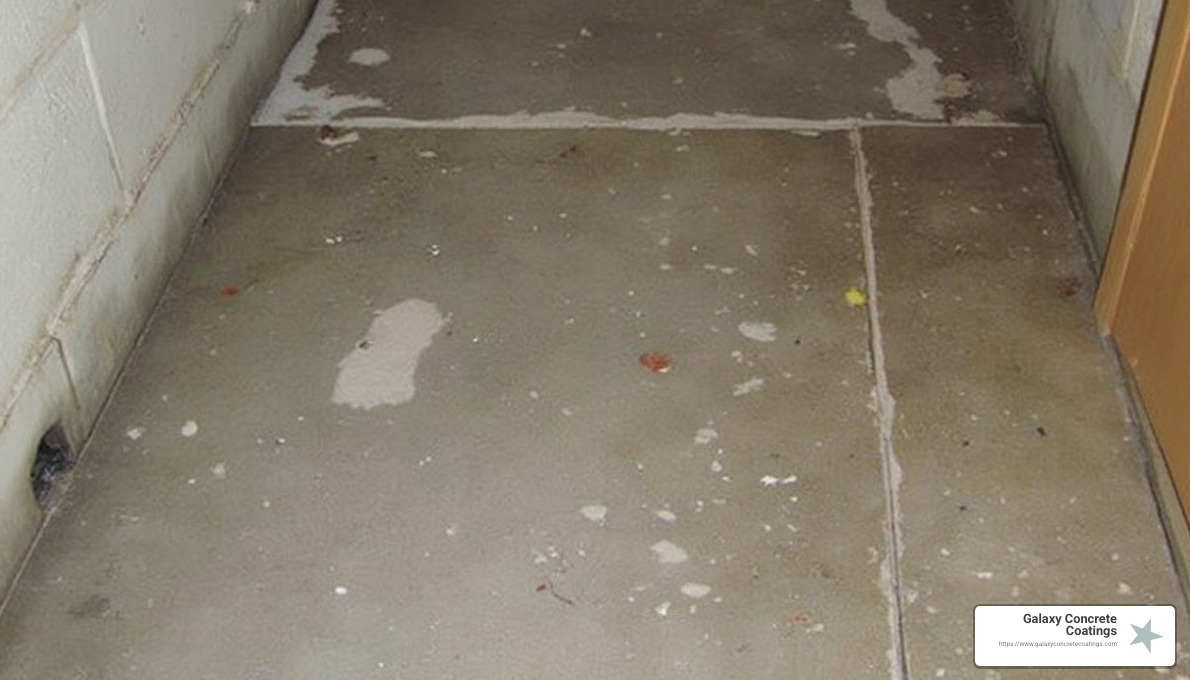
Rigid foam insulation is my go-to recommendation for most homeowners. Extruded polystyrene (XPS) foam board creates an excellent thermal break between cold concrete and your living space. With an R-value of about R-5 per inch, even a 1-inch layer makes a tremendous difference. You can lay it directly on clean concrete and top it with plywood to create a warmer subfloor.
Insulated subfloor panels like DRICORE® offer an all-in-one solution that’s particularly DIY-friendly. These interlocking panels have built-in moisture barriers and a raised design that creates an insulating air gap. They install quickly without adhesives and add minimal height – usually just 3/4″ to 1″.
For maximum insulation with minimal height loss, a foam + sleeper system combines 1″ rigid foam with 1×3″ pressure-treated sleepers placed over the foam. With plywood attached to the sleepers, you create dead air space for additional insulation. This system delivers excellent performance but requires more skill to install correctly.
As Bryan Baeumler (who I completely agree with) says: “In my mind, you cannot finish a basement without putting down a proper subfloor. Every house I’ve ever built has an insulated subfloor in the basement. It’s the only way to do it.”
Here’s a practical comparison to help you decide:
| System | R-Value | Height Added | Cost per sq.ft. | Installation Difficulty |
|---|---|---|---|---|
| 1″ XPS + Plywood | R-5 | 1.5″ | $1.50-2.00 | Moderate |
| Insulated Panels | R-3 to R-4 | 0.75-1″ | $2.00-3.00 | Easy |
| Cork Underlayment (6mm) | R-1.5 | 0.25″ | $0.95-1.50 | Easy |
| Foam + Sleeper | R-5 to R-10 | 2-2.5″ | $2.50-3.50 | Difficult |
I recently heard from a Canadian homeowner who installed 6mm cork underlayment beneath an 11mm cork floating floor. Their basement temperature rose from 15°C (59°F) to 22°C (72°F) during even the coldest winter weather – without changing a thing about their heating system!
Heating Add-Ons: Radiant & HVAC Tweaks
Sometimes insulation alone isn’t enough, especially in older homes or extremely cold climates. Adding heat sources specifically designed for basements can transform the space completely.
Radiant floor heating feels like absolute luxury underfoot. You have two main options: hydronic (water-based) systems use PEX tubing embedded in a thin layer over your existing slab. They cost more upfront ($12-20/sq.ft.) but run more efficiently. Electric mat systems are simpler to install ($6-12/sq.ft.), work with most floor coverings, and can even be DIY-friendly, though they cost more to operate long-term.
Don’t overlook simple HVAC adjustments! Moving air registers to floor level in basements makes a huge difference since warm air naturally rises. Adding cold air returns near the floor improves circulation dramatically. I’ve seen basements transform just by having an HVAC professional reconfigure existing ductwork.
For supplemental heating, baseboard heaters provide targeted warmth exactly where you need it. Ductless mini-split heat pumps offer efficient zone heating that can cool in summer too. Radiant ceiling panels warm the space without taking up valuable floor space.
The HVAC pros at Inside Outside Guys make a great point: “Have an HVAC professional add low-level forced-air registers in a finished basement. The stack effect means warm air naturally rises, so delivering heat at floor level is most efficient.”
A word of caution from personal experience: While space heaters seem like an inexpensive fix, leaving one on for just 8 hours a day can add at least $42.30 to your monthly energy bill. More permanent solutions cost more initially but save money long-term and provide better comfort.
Inside the home, indoor concrete floor coatings can add durability and make concrete easier to maintain.
Flooring Choices That Feel Warmer
The finished flooring material you choose makes a huge difference in how warm your basement feels, even without changing the actual temperature. Some materials simply feel warmer underfoot.
Cork flooring is my personal favorite for basements. It’s a natural insulator with tiny air pockets that retain heat. An 11mm cork floating floor with 6mm underlayment provides insulation equivalent to 1″ of Styrofoam! It’s comfortable underfoot, naturally mold-resistant, and available in many styles beyond the traditional bulletin board look.
Carpet with quality padding provides excellent insulation from cold concrete. Just be sure to choose moisture-resistant padding designed specifically for basements, and synthetic fibers that resist mold better than natural materials. Carpet tiles offer easy replacement if moisture issues occur – a smart insurance policy for basement installations.
Engineered wood with underlayment feels significantly warmer underfoot than tile or vinyl. It’s more stable in basement environments than solid hardwood and can be installed as a floating floor over insulation. Just make sure to choose products specifically rated for below-grade installation.
Luxury vinyl plank with insulated backing offers waterproof durability with surprising warmth. Many now come with attached cork or foam backing that insulates while dampening sound. These floors install easily over most subfloors and stand up to the occasional moisture issues basements sometimes experience.
Polyaspartic concrete coatings create a sealed, non-porous surface that eliminates moisture issues while maintaining concrete’s thermal mass. When installed over insulation systems, these coatings provide a beautiful, durable finish that’s comfortable underfoot. The best part? One-day installation with immediate use.

Why Polyaspartic Coatings Are Superior
I’ve seen countless basement floors over my career, and I can tell you – while epoxy floor coatings have been the standard for years, polyaspartic coatings offer significant advantages that make them ideal for solving cold basement floor issues:
They’re incredibly temperature-flexible, able to be applied and cured at temperatures as low as -30°F. This makes them perfect for basement installations in any season, even in the middle of winter when basement floors are at their coldest.
The rapid installation is a game-changer. Unlike epoxy, which can take days to cure (leaving you unable to use your space), polyaspartic coatings cure in hours. This means your basement floor can be coated and ready for use in a single day – no hotel stays or camping upstairs required!
Durability is where polyaspartic truly shines – these coatings are 4x stronger than epoxy, resisting chips, scratches, and stains that commonly affect basement floors. When you’re investing in fixing a cold floor, you want that solution to last, not need replacement in a few years.
The moisture resistance creates a completely non-porous surface that prevents moisture from penetrating, addressing one of the main causes of cold basement floors. And unlike epoxy, which can yellow over time (especially with basement lighting), polyaspartic coatings remain clear and vibrant for years.
At Galaxy Concrete Coatings, our polyaspartic floor systems can be installed over properly insulated concrete to create a warm, durable, and beautiful basement concrete floor solution in just one day. I’ve seen the change – it’s remarkable.
Moisture & Air-Sealing Essentials
No discussion of cold basement floor solutions would be complete without addressing moisture and air leakage. These factors can undermine even the best insulation systems if left unchecked.
Vapor barriers are absolutely essential under any basement floor insulation. Standard 6-mil polyethylene sheeting works well when installed properly – seams should overlap by at least 12″ and be taped securely. The barrier should extend up walls 3-4″ and be sealed to prevent moisture migration. Think of it as your first line of defense against the dampness that makes floors feel colder.
Air sealing critical areas makes a surprising difference in floor temperature. The rim joists where your foundation meets wood framing are notorious heat-loss culprits. Spray foam insulation in these areas provides both air sealing and insulation, reducing heat loss by up to 40% in this area alone. Old single-pane basement windows should be replaced with double-pane, Low-E models, and insulated window well covers added outside.
Don’t forget basement stairwells – they create a direct path for warm air to escape upward. Weather-strip doors at both the top and bottom of stairs and insulate stairwell walls to keep the warmth where you want it.
Humidity control plays a crucial role in comfort. Maintain relative humidity between 35-50%, using a hygrometer to monitor levels. A whole-basement dehumidification system is worth considering for persistent moisture issues. Always address any water intrusion problems before insulating – otherwise, you’re just trapping moisture against your foundation.
One homeowner I worked with used a thermal imaging camera and found that their rim joists were the single largest source of heat loss in their basement: “After sealing and insulating the rim joists, our basement temperature increased by 5 degrees without changing the thermostat setting.”
A quick note on radon: When sealing basement floors, consider radon testing and mitigation if needed. Proper sealing can actually help control radon, but systems should be designed with this in mind, especially in high-radon areas.
High-ROI Cold Basement Floor Solutions
If you’re looking for the best return on investment, these cold basement floor solutions provide the biggest bang for your buck over the long term:
Wall insulation (R-10+) complements floor insulation for comprehensive temperature control. The U.S. Department of Energy reports savings of $250-$400 annually just from properly insulating basement walls. Foam board insulation on basement walls prevents heat loss from all sides, not just the floor.
A lifetime polyaspartic floor coating creates a seamless, waterproof surface that eliminates moisture issues contributing to cold floors. It increases home value by making basement space fully usable and lasts 15+ years with minimal maintenance. When potential buyers see a beautiful, warm basement floor, they see finished square footage rather than a cold storage area.
The combined approach delivers the best results: insulate walls and rim joists, install rigid foam insulation on the floor, apply polyaspartic coating over the prepared surface, and add zone-controlled heating if needed. This comprehensive solution transforms your basement from the coldest room in the house to potentially the most comfortable.
According to home improvement experts, a properly insulated and finished basement can return 70-75% of its cost in home value, making it one of the better renovation investments you can make. That’s not counting the energy savings and increased living space you’ll enjoy.
Skip Bedell, TV host and professional contractor, makes a point I completely agree with: “You never want to put your finished floors on top of wet, damp, and cold concrete. A proper subfloor system with a quality floor coating gives you a layer of protection to help with moisture and cold coming from concrete.”
Mistakes to Avoid & Ceiling Height Tricks
When implementing cold basement floor solutions, watch out for these common pitfalls I’ve seen homeowners make:
Ignoring moisture is the biggest mistake. No insulation system will work properly if water is seeping through your foundation. Address water issues first – always!
Skipping vapor barriers undermines everything else you do. Without a moisture barrier, insulation can become saturated and ineffective, sometimes within months of installation.
Under-insulating provides minimal benefit for the effort. If you’re going to the trouble of insulating, aim for at least R-5 under floors. The difference between R-2 and R-5 is noticeable every time you walk barefoot on that floor.
Compressing ductwork happens when people don’t plan properly for raised floors. Measure clearances carefully and adjust your HVAC system if needed before installing new floors.
Neglecting building codes can cause headaches later. Most codes require at least 7′ ceiling height in finished spaces, and raising your floor can put you under that threshold.
If ceiling height is an issue, try these clever workarounds: Use lower-profile insulation systems when every inch counts. Consider partially dropping the floor in specific areas where height is most needed. Use thinner subfloor systems like 1/2″ plywood over 1″ foam instead of standard 3/4″ plywood. Cork or other thin insulating underlayments can provide some benefit with minimal height impact.
One clever homeowner with a 7’2″ basement ceiling used a 1/2″ cork underlayment with an 11mm cork floating floor: “We got the warmth without sacrificing the ability to stand up straight!” Sometimes the simplest solutions are the most effective.
At Galaxy Concrete Coatings, we’ve helped homeowners in Denver, Phoenix, Tucson, Cincinnati, and Indianapolis transform their cold basement floors into warm, beautiful living spaces with our one-day polyaspartic coating systems. Our expert installers can work with your existing insulation or recommend complete solutions to keep your basement comfortable year-round.
Conclusion
There’s no need to shiver through another winter with icy basement floors. Whether you opt for a quick fix or a comprehensive upgrade, there’s a cold basement floor solution that fits your needs and budget.
The most successful approaches typically combine several strategies:
First, tackle moisture and air leaks that make your basement feel like a refrigerator. Then add appropriate insulation that works with your existing ceiling height. Next, select flooring that improves warmth and comfort underfoot. Finally, consider adding supplemental heating if your space still needs that extra boost of warmth.
At Galaxy Concrete Coatings, we’ve helped countless homeowners transform their frigid basement floors into cozy, inviting spaces. Our advanced polyaspartic coating systems offer a game-changing solution that traditional epoxy simply can’t match. While epoxy has been the standard for years, our polyaspartic coatings cure in hours rather than days, allowing us to complete your basement floor change in just one day with minimal disruption to your family life.
When paired with proper insulation, our floor coatings create a seamless, waterproof surface that helps maintain warmth while blocking moisture—addressing two major causes of cold feet in basements. And unlike temporary fixes, our solutions come with a lifetime warranty that protects your investment for years to come.
“I can’t believe I waited so long to fix my basement floor,” says Melissa from Denver. “The difference is night and day—we actually use our basement now instead of avoiding it all winter!”
Ready to say goodbye to cold basement floors? Our team serves homeowners in (https://maps.app.goo.gl/Puexf5x3GtjvLUmS6), [Phoenix](https://maps.app.goo.gl/upq42kxRjiuyPgRV8), [Tucson](https://maps.app.goo.gl/HCnsQJdchAAsKuHQ7), [Cincinnati](https://maps.app.goo.gl/uTQD7CL9nRtSDNTV6), and [Indianapolis](https://maps.app.goo.gl/o4jBAcVuGkrFhbBD9). Contact us today for a free consultation on the best cold basement floor solutions for your home—and start enjoying every square foot of your living space, no slippers required!