

The Great Concrete Debate: To Paint or Not to Paint?
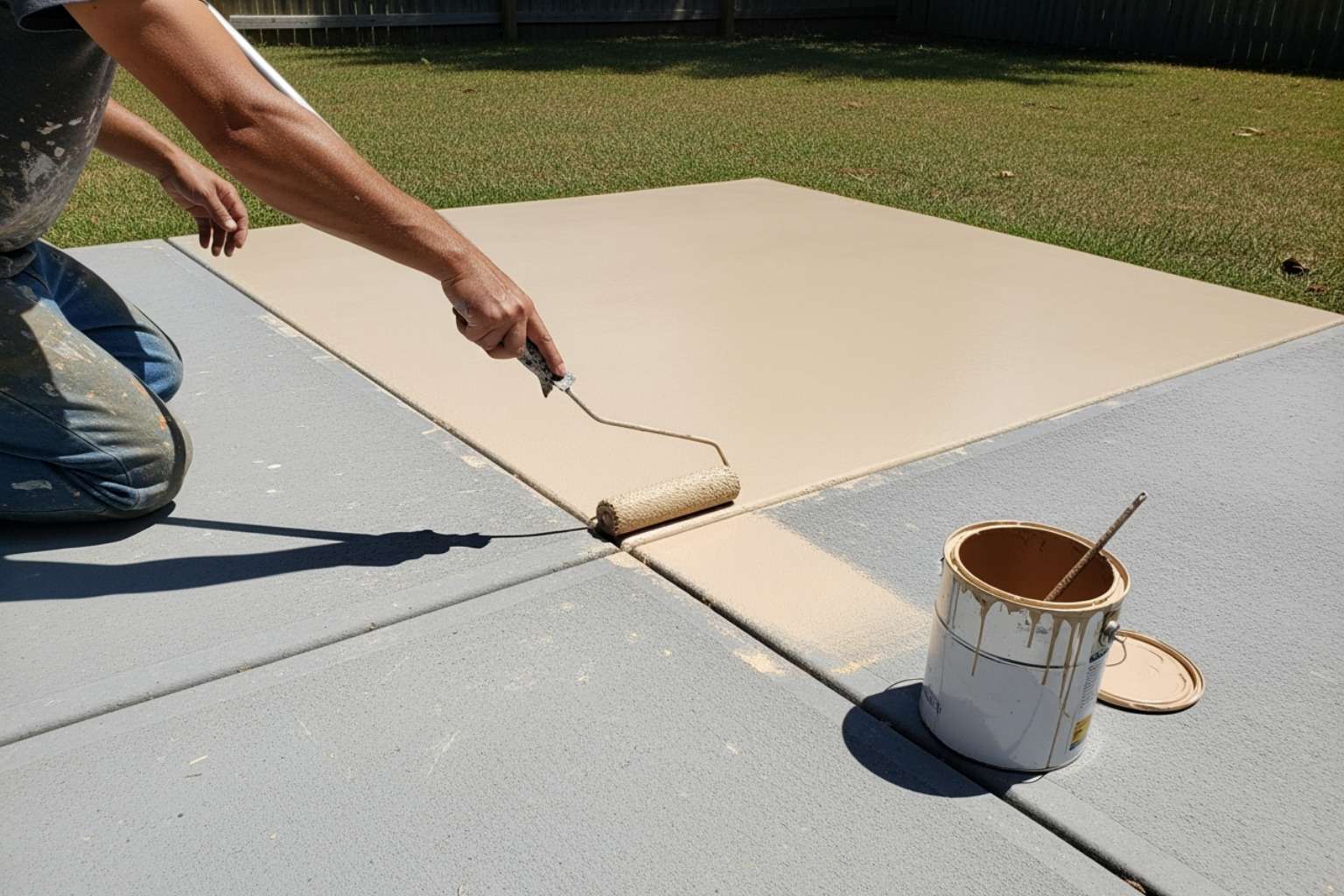
Why Homeowners Ask “Can You Paint Cement?”
Can you paint cement? Yes, you can paint cement surfaces, but there’s much more to consider before grabbing a brush. While it seems like a cheap and easy DIY fix for a boring garage or patio, the reality is often disappointing.
Quick Answer for “Can You Paint Cement”:
- Yes, cement can be painted, but proper surface preparation is non-negotiable.
- Paint typically lasts only 1-3 years before it begins to chip, peel, and fail.
- Moisture issues are the #1 cause of paint failure on concrete surfaces.
- Professional polyaspartic coatings last 15+ years with minimal maintenance.
Many homeowners who attempt to paint their concrete floors end up searching for “how to remove paint from concrete” just a year or two later. Concrete is a porous, alkaline material that constantly deals with moisture, creating unique challenges that cause standard paint to bubble, peel, and chip.
While you can paint cement, the real question is: should you? As Hayley Shahbazi, Manager at Galaxy Concrete Coatings, I’ve seen countless homeowners frustrated by failed paint jobs. The right question isn’t if you can paint it, but how to properly protect and beautify your concrete for decades, not just a few years.
Concrete Coating Lifespan Comparison:
- Traditional Paint: 1-3 years
- Concrete Stain: 5-10 years
- Epoxy Coating: 5-10 years
- Polyaspartic Coating: 15+ years
The Dark Side of the Moon: Why Painting Concrete Often Fails
Painting concrete might seem like a simple solution, but it often leads to a galaxy of problems. The most common complaints we hear involve peeling, chipping, and flaking paint. Unlike a static wall, concrete expands and contracts with temperature changes. Standard paint isn’t flexible enough to handle this movement, leading to cracks and pieces lifting away, requiring constant touch-ups.
The core issue lies in concrete’s nature. It’s porous, like a sponge, and wicks moisture from the ground. When this moisture gets trapped under a layer of paint, it creates hydrostatic pressure that pushes the paint right off the surface, causing blistering and bubbling. You may also see efflorescence—a white, powdery substance from minerals leaching out of the concrete—which also forces the paint to delaminate. Trapped moisture can also lead to mold and mildew growth under the paint film.
Beyond appearance, painted concrete can become dangerously slippery when wet. For garage floors, hot tire pickup is a major problem; the heat from tires can soften the paint, causing it to peel off and stick to your tires. A poorly executed paint job can even lower your property value, signaling a cheap, temporary fix. These factors show why paint is simply not a long-term solution for concrete floors.
Testimonial:
“The crew was on time, professional, and did a fantastic job. The floor looks amazing and is so easy to clean. Highly recommend Galaxy for anyone wanting a quality job!” – Brian S. (Cincinnati)
A Universe of Options: Comparing Paint, Stain, and Polyaspartic Coatings
When you’re looking to transform your concrete, paint is just one star in a vast galaxy of options. Let’s explore the key differences between painting, staining, and applying a high-performance polyaspartic coating so you can make an informed decision that truly “Takes Your Concrete Out of this World.”
| Feature | Concrete Paint | Concrete Stain | Polyaspartic Coatings (Galaxy) |
|---|---|---|---|
| Durability | Low (prone to chipping, peeling) | Medium (penetrates, but can fade) | High (extreme abrasion, chemical, impact resistance) |
| Lifespan | 1-3 years (requires frequent reapplication) | 5-10 years (can be longer with proper sealing) | 15+ years (lifetime warranty) |
| Appearance | Opaque, uniform color; hides imperfections | Translucent, variegated; mimics natural stone | High-gloss, seamless, customizable flake/chip systems |
| Maintenance | High (frequent touch-ups, reapplication) | Low (periodic resealing) | Very Low (easy to clean, minimal upkeep) |
| UV Resistance | Varies; can fade, chalk | Good (penetrates, less likely to fade) | Excellent (UV stable, non-yellowing) |
Key Differences: Paint vs. Stain vs. Coatings
Understanding how these products work is key to choosing the right one.
- Concrete Paint: This is a thin, opaque film that simply sits on top of the concrete. It covers imperfections but creates a layer that is highly susceptible to chipping and peeling from moisture and abrasion. Even specialized acrylic latex or epoxy paint kits for garages often fail within a few years.
- Concrete Stain: Unlike paint, stain penetrates the concrete’s pores, creating a translucent, variegated look. Because it’s not a surface film, it won’t peel like paint. However, it offers no real protection against abrasion or chemicals and requires a separate sealer.
- Polyaspartic Coatings (Galaxy): Our polyaspartic systems are in a league of their own. They are a thick, protective, and decorative system that chemically bonds with the concrete. This creates a seamless, non-porous, and incredibly durable surface. As an award-winning dealer of high-performance coatings, our polyaspartic flake/chip systems offer unparalleled protection against abrasion, chemicals, impacts, and UV damage.
The Stellar Solution: Why Polyaspartic Coatings Outshine Paint and Epoxy
Our polyaspartic coatings are light-years ahead of paint and even traditional epoxy.
- Superior Durability: They resist abrasion, impact, chemicals, and hot tire pickup.
- One-Day Installation: Our professional teams can often complete your project in just one day.
- UV Stability: Unlike epoxy, our coatings are 100% UV stable and will never turn yellow.
- Flexibility: Polyaspartic is more flexible than epoxy, moving with the concrete to prevent cracking.
- Low Maintenance: The non-porous surface is incredibly easy to clean.
- Lifetime Warranty: We back our work with a lifetime warranty for your peace of mind.
Testimonial:
“Our garage floor looks incredible! The team was professional and the finish is beautiful and tough. We are so happy we chose Galaxy.” – Lisa M. (Denver)
Your Pre-Flight Checklist: How to Prepare Concrete for a Coating
Proper concrete preparation is the absolute launchpad for success. It’s the most critical step, and it’s where most DIY projects crash and burn. Getting a concrete surface truly ready isn’t just about sweeping; it requires specialized tools and expertise to create the perfect profile for a coating to grab on and last for years.
Alt text: Galaxy technician using a professional diamond grinder to prepare a concrete floor, ensuring optimal adhesion for the polyaspartic coating.
Step 1: Blast Off Grime and Old Coatings
Before any new coating can be applied, the surface needs a deep cleanse. This involves degreasing to remove all oil and grime. If old paint or failed coatings exist, they must be completely removed. For professional results, we use industrial-grade diamond grinders. These machines mechanically abrade the concrete, removing contaminants and creating the ideal roughened texture for our polyaspartic system to form an unbreakable bond.
Step 2: Repairing Craters and Cracks
Your concrete floor needs a smooth, intact surface for a perfect coating. We carefully fill all cracks, holes, and pits with professional-grade, fast-setting menders. This ensures the final surface is perfectly level and smooth, so your coating looks seamless and performs flawlessly.
Step 3: The Critical Moisture Test
Moisture is the silent enemy of any concrete coating. If moisture is trapped in the slab, it will cause any coating to bubble, peel, and fail. While you can do a simple plastic sheet test at home, our experts use professional moisture meters to get an exact reading. We ensure the moisture content is below 5% before applying our coatings, guaranteeing your beautiful Galaxy floor adheres perfectly and lasts for decades.
Frequently Asked Questions About Painting Cement
“Can you paint cement?” is a question we hear often. While the answer is technically “yes,” the real question should be about the results and how long they’ll last.
How long does painted concrete typically last?
A painted concrete floor usually only lasts for about 1 to 3 years before showing signs of wear. Factors like foot traffic, weather exposure, and moisture will cause the paint to fade, chip, and peel, forcing you into a frustrating cycle of touch-ups and reapplication. In contrast, our professional polyaspartic coatings are engineered to last 15+ years with minimal maintenance, backed by a lifetime warranty. It’s a true long-term solution.
What is the best coating for different concrete floor applications?
Different spaces have unique needs, and a one-size-fits-all paint is rarely the answer. Our polyaspartic systems are designed to excel in specific applications:
- Garages: Our polyaspartic flake systems offer ultimate resistance to hot tires, oil, and impacts. Learn more about our garage floor coatings.
- Patios & Pool Decks: We use UV-stable polyaspartic coatings with anti-slip additives for a safe, beautiful, and fade-resistant outdoor surface. Find our patio floor coating options.
- Basements: Our seamless, moisture-resistant coatings transform damp basements into bright, usable living spaces. Explore our basement floor coating solutions.
- Driveways: Boost your curb appeal with a tough, weather-resistant polyaspartic system built to withstand vehicles and the elements. Find out more about our driveway coatings.
- Commercial Spaces: For retail, restaurants, or showrooms, our durable, easy-to-clean coatings provide a professional look that stands up to heavy traffic. See our commercial floor coating services.
Can painting concrete affect my property value?
Absolutely. A peeling, chipped, or poorly applied paint job on concrete can hurt your property’s value. It signals to potential buyers that a cheap, temporary fix was used. Conversely, investing in a professional polyaspartic coating from Galaxy is a smart move that boosts your property’s value and appeal. A stunning, durable floor is a huge selling point that shows a commitment to quality.
“The floor is beautiful and has added value to our home. The process was quick and the results are stunning. Thank you, Galaxy!” – Mark D. (Indianapolis)
Conclusion: Launch Your Concrete to a New Dimension
Alt text: Gorgeous residential patio with outdoor furniture, featuring a flawless polyaspartic coating applied by Galaxy Concrete Coatings.
So, can you paint cement? While the answer is yes, we’ve seen that it’s a short-term fix that often leads to a frustrating cycle of peeling, chipping, and constant maintenance. DIY paint jobs carry significant risks, from poor adhesion to moisture-related failures, ultimately costing you more time and effort in the long run.
Instead of settling for a temporary solution, launch your concrete to a new dimension with Galaxy Concrete Coatings. We specialize in the professional installation of high-performance polyaspartic flake/chip systems, delivering a level of durability and beauty that paint can’t match. Imagine a floor that resists abrasions, impacts, and chemicals, backed by a lifetime warranty for total peace of mind.
Our commitment to excellence is reflected in our stellar customer reviews. We take pride in changing dull concrete into a shining success. Don’t get stuck in a paint-and-peel cycle. Choose a coating that will truly lift your concrete and improve your home’s value for decades to come.
Explore our residential coating options: https://galaxyconcretecoatings.com/residential/
Galaxy Concrete Coatings Serves These Areas:
- Cincinnati, [Ohio](https://galaxyconcretecoatings.com/ohio/cincinnati/)
- Denver, [Colorado](https://galaxyconcretecoatings.com/colorado/denver/)
- Indianapolis, [Indiana](https://galaxyconcretecoatings.com/indiana/indianapolis/)
- Phoenix, [Arizona](https://galaxyconcretecoatings.com/arizona/phoenix/)
- Tucson, [Arizona](https://galaxyconcretecoatings.com/arizona/tucson/)