

From Concrete to Coatings: Exploring Industrial Floor Solutions
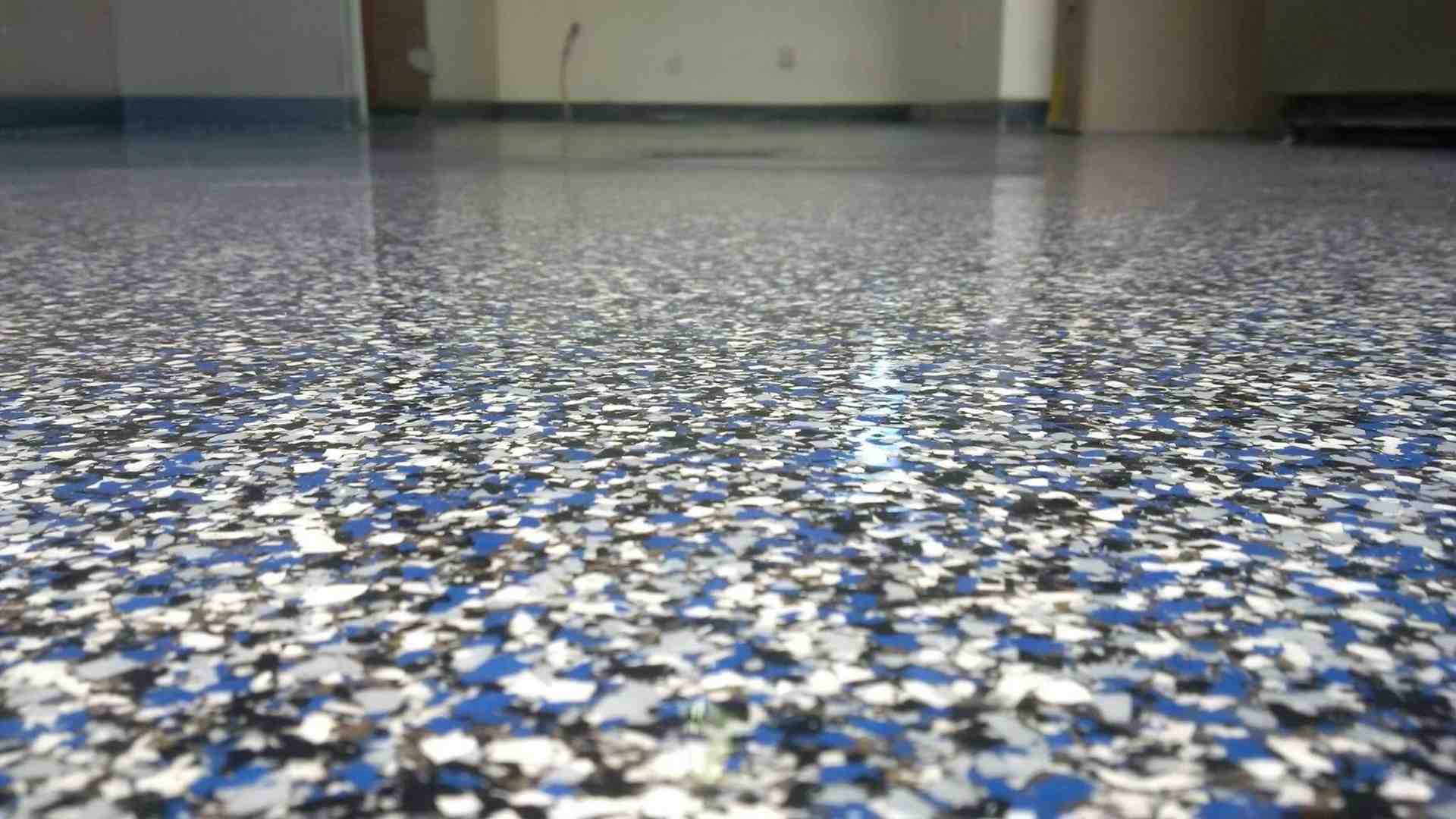
Why Industrial Floor Solutions Are Critical for Your Facility
Industrial floor solutions are specialized coating systems installed over concrete floors to improve durability, safety, cleanliness, and overall functionality in demanding commercial and industrial environments.
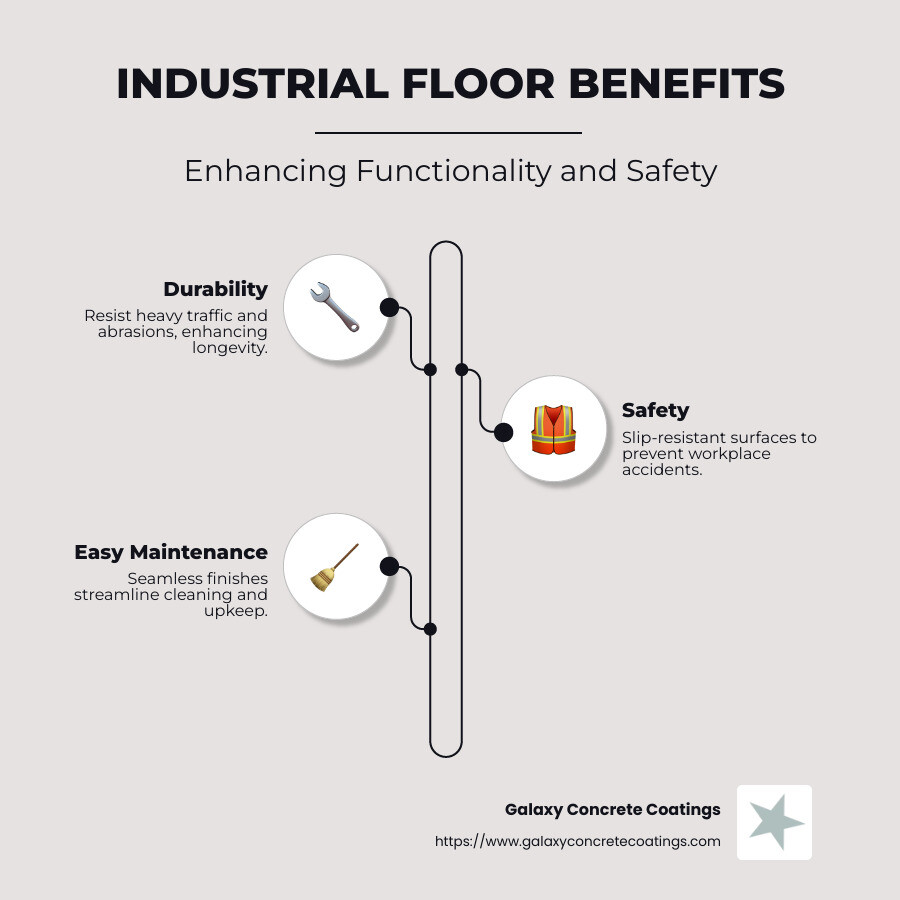
Quickly understand what industrial floor solutions can do for you:
- Durability: Resist heavy traffic, impacts, and abrasions better than bare concrete.
- Safety: Provide slip-resistant surfaces to prevent accidents.
- Easy Cleaning: Offer seamless finishes that simplify sanitation and reduce dirt accumulation.
- Fast Installation & Curing: Polyaspartic coatings can often be installed in just one day, minimizing downtime.
- Low Maintenance: Reduce ongoing maintenance costs and time.
- Regulatory Compliance: Meet industry-specific health, safety, and environmental standards.
Choosing the right flooring solution sets your business up for reduced downtime, lower long-term costs, and safer working conditions. As Hayley S, manager at Galaxy Concrete Coatings, I’ve helped develop Galaxy’s industry-leading polyaspartic industrial floor solutions, overseeing hundreds of successful rapid-turnaround installations. This guide breaks down options simply, starting with how polyaspartic coatings outperform other choices.
Industrial Floor Solutions: Types of Coatings
When it comes to industrial floor solutions, not all coatings are created equal. Each type of coating offers its own unique set of strengths and limitations that can affect your facility’s efficiency, safety, and operational downtime. Let’s explore the main types you’ll come across—epoxy, polyurethane, methyl methacrylate (MMA), and polyaspartic coatings—and why polyaspartic coatings have emerged as the clear leader in industrial environments.
Epoxy Coatings
Epoxy coatings have long been the go-to choice for industrial floors, primarily due to their economical upfront cost and decent chemical resistance. They’re made by mixing resin with a hardener, resulting in a rigid, plastic-like finish that’s durable enough for lighter traffic areas.
However, epoxy isn’t without drawbacks. It requires a longer cure time—usually between 3 to 7 days—leading to costly operational downtime. Epoxy floors can also yellow under UV exposure, making them less ideal for naturally lit facilities. Over time, their brittleness can lead to cracking and chipping, especially if your concrete floors shift or expand due to temperature changes.
As one facility manager admitted, “We used epoxy for years because it was what everyone else used. We didn’t realize how many days of production we were losing until we switched to polyaspartic.”
Epoxy floors serve a purpose, but their limitations have pushed many facilities to seek a better solution.
Polyurethane Coatings
Polyurethane coatings have improved upon epoxy in several areas. They offer better flexibility, reducing the risk of cracks, and feature improved UV resistance that minimizes discoloration. Polyurethane also resists scratches and scuffs better, providing a tougher surface.
Still, polyurethane floors typically take around 2 to 4 days to cure—better than epoxy, but still a significant downtime. Additionally, many polyurethane formulations contain higher levels of VOCs (volatile organic compounds), leading to odors and requiring better ventilation during installation.
While polyurethane solves some epoxy issues, it still doesn’t offer the rapid turnaround and environmental friendliness that modern facilities increasingly seek.
Methyl Methacrylate (MMA) Coatings
MMA coatings are known for one standout advantage: incredibly fast curing times, sometimes fully curing within just hours. They’re also chemically resistant and can be installed at colder temperatures with less prep work.
Yet MMA coatings come with considerable downsides. Installation typically involves strong, unpleasant odors due to high VOC content. They’re also more brittle, costlier, and have fewer qualified installers available on the market—a headache for busy facility managers.
So, while MMA coatings may seem attractive on the surface, their practical challenges often outweigh their rapid-curing benefits.
Polyaspartic Coatings in Industrial Floor Solutions
Polyaspartic coatings have quickly risen to become the gold standard in industrial floor solutions—and for good reason. They offer the best features of epoxy, polyurethane, and MMA coatings while avoiding their common pitfalls.
“Polyaspartic coatings take less time and labor to apply and benefit from low VOCs, making them the ideal choice for facilities that can’t afford extended downtime.”
With polyaspartic coatings, you can typically return your floors to full service within just 24 hours or less. This rapid installation dramatically minimizes disruption and lost productivity.
Polyaspartic floors won’t yellow, thanks to excellent UV stability. They’re incredibly durable, resisting heavy impacts, abrasions, and chemicals better than epoxy or polyurethane. Thanks to their flexibility, polyaspartic coatings withstand concrete movement without cracking or chipping.
Additionally, polyaspartic formulations have low or zero VOCs, creating a safer, more environmentally-friendly workplace. Plus, they can be applied even in extreme temperatures—from freezing (0°F) to very warm conditions (100°F).
A food processing facility manager in Colorado summed it up perfectly: “When we needed to update our production floor, we couldn’t afford days of downtime. Galaxy Concrete Coatings installed our polyaspartic floor on a Saturday. We were fully operational Monday morning. Three years later, the floor looks as good as day one!”
Stories like these highlight why polyaspartic coatings are no longer just another option—they’re the superior choice in industrial floor solutions. When your facility’s productivity and safety matter most, polyaspartic coatings from Galaxy Concrete Coatings deliver results other systems simply can’t match.
Benefits of Polyaspartic Coatings in Industrial Floor Solutions
Let’s explore why polyaspartic coatings have truly changed the game for industrial floor solutions—and why they’re quickly becoming the go-to choice for facilities looking for durability, reliability, and exceptional performance.
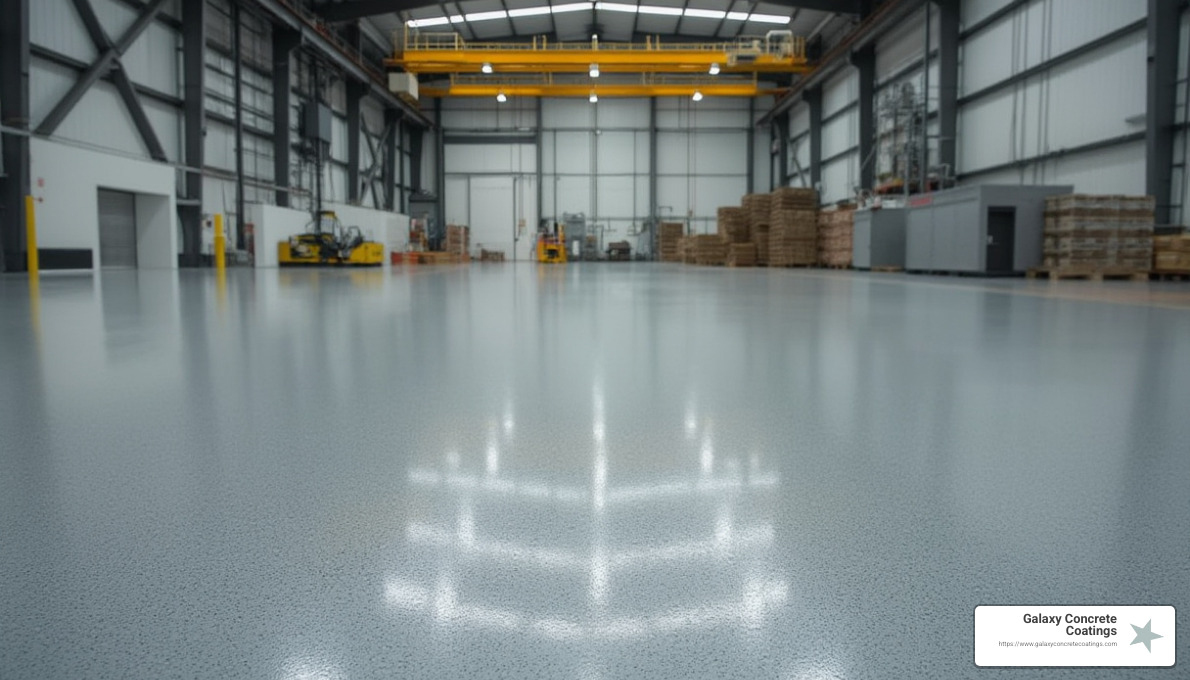
Rapid Installation and Return to Service
In busy industrial facilities, downtime can quickly turn into lost revenue. That’s why polyaspartic coatings have become so popular—they cure incredibly fast. Unlike traditional epoxy coatings that can sideline your operations from three to seven days, polyaspartic coatings are typically ready for full use within just 24 hours.
Imagine installing your new flooring over the weekend and getting back to full-speed production by Monday morning. That’s the power of polyaspartic flooring: a single-day installation with minimal disruption.
Polyaspartic coatings also have a wide range of application temperatures—from near-freezing all the way up to 100°F. This flexibility means you don’t have to wait for perfect weather conditions or waste money on climate-controlled environments. Just install and go.
Superior Durability and Longevity
Let’s face it—industrial floors take a beating. Heavy machinery, constant foot and forklift traffic, accidental drops—you name it. Polyaspartic coatings stand up remarkably well to all these challenges, offering exceptional abrasion resistance that’s up to four times more durable than epoxy.
Thanks to their slightly flexible nature, polyaspartic coatings absorb impacts without cracking or chipping. This translates directly into reduced maintenance, fewer repairs, and lower overall costs. Plus, their impressive chemical resistance ensures protection against acids, solvents, oils, and other harsh substances commonly found in industrial settings.
UV Stability for Long-Term Appearance
Ever noticed how epoxy-coated floors tend to yellow and fade over time, especially when exposed to sunlight? Polyaspartic coatings eliminate this issue entirely. They’re UV-stable, which means that even under constant sunlight exposure, your floor maintains a clean, professional appearance year after year.
Colors remain vibrant, decorative elements stay sharp, and your facility continues to project a polished, attractive image long after installation.
Environmental and Safety Benefits
Today, businesses care deeply about protecting the environment and keeping their workers safe. Polyaspartic coatings align perfectly with these priorities.
Many polyaspartic products contain low or zero VOCs (volatile organic compounds), meaning you’ll have better air quality during and after installation. Additionally, their seamless, non-porous surfaces prevent bacteria from gaining a foothold—ideal for food processing, medical facilities, and pharmaceutical environments where cleanliness is critical.
You can even customize the slip resistance of your polyaspartic floor, giving you the exact safety profile your facility needs. In case of spills, their chemical-resistant, impermeable surface prevents liquids from soaking into the concrete, simplifying cleanup and protecting groundwater.
Polyaspartic vs. Epoxy: A Clear Comparison
To really grasp why polyaspartic coatings are such a breakthrough, let’s look at them side-by-side with epoxy coatings:
| Feature | Polyaspartic Coatings | Epoxy Coatings |
|---|---|---|
| Installation Time | Typically 1 day | 2-4 days |
| Full Cure Time | 24 hours or less | 3-7 days |
| UV Stability | Excellent – no yellowing | Poor – yellows over time |
| Abrasion Resistance | Superior | Good initially, but degrades |
| Chemical Resistance | Excellent | Good, but limited |
| Application Temperature | 0-100°F | 50-90°F |
| Flexibility | Moderate – resists cracking | Low – brittle, prone to cracks |
| VOC Content | Low to zero | Often high |
| Longevity | 15+ years | 5-10 years typically |
For a deeper dive into this comparison, check out our detailed guide on Epoxy vs. Polyaspartic Floor Coatings.
A brewery owner shared his experience: “After carefully comparing our flooring options, we went with polyaspartic coatings. Three years of heavy usage later—constant moisture, cleaning chemicals, and heavy equipment traffic—the floor still looks practically brand new. Our old epoxy floor was already showing serious wear after just one year.”
Stories like these show exactly why polyaspartic technology has rapidly become the gold standard for industrial floor solutions. It’s not just marketing hype—it’s real-world performance.
Whether your facility is a busy warehouse, a busy manufacturing plant, or a large food processing facility, polyaspartic coatings deliver best value, longevity, and peace of mind.
To learn more about the advantages of polyaspartic coatings, visit our detailed comparison guide: Epoxy vs. Polyaspartic Floor Coatings.
How to Choose the Right Industrial Floor Solution
Choosing the best industrial floor solution for your facility doesn’t have to feel like solving a complicated puzzle. It comes down to understanding your unique business needs and matching them with the strengths of available flooring options. Even though we’ve highlighted polyaspartic coatings as the top performer for most industrial settings, knowing exactly what factors matter most for your specific situation is essential to getting the perfect floor.
With so many factors in play—like the type of traffic at your facility, chemical exposures, or even your budget—let’s simplify this into a clear narrative you can use to make the right decision.
When it comes to traffic type and volume, consider how busy your floor is day-to-day. If your facility sees frequent heavy machinery, forklift traffic, or carts rolling around constantly, you’ll need flooring that’s durable, impact-resistant, and stands up to plenty of wear and tear. Polyaspartic coatings excel here, offering excellent abrasion and impact resistance, which means fewer repairs and less downtime.
Next, think about chemical exposure at your location. Are you dealing with chemical spills, cleaning agents, solvents, or acids regularly? Floors in industrial settings need to withstand these substances without staining, fading, or deteriorating. Polyaspartic coatings offer outstanding chemical resistance—far better than epoxy—keeping your floors looking new and performing safely for years.
Your facility’s environmental conditions matter too. Whether temperature swings from hot to cold, exposure to sunlight, or areas prone to moisture, your flooring must withstand these conditions without issues. Polyaspartic coatings have you covered: they’re flexible enough to handle thermal shock, resistant to moisture damage and mold growth, and UV-stable (meaning they won’t yellow or lose their appealing look over time).
Of course, businesses can’t afford to halt operations unnecessarily, so your installation timeline is a critical factor. Polyaspartic coatings can typically be installed in just one day, even in temperatures as low as freezing, and they’re fully cured and ready by the next day. Compare this to epoxy, which takes multiple days for installation and even longer for full curing, and it’s clear why polyaspartic flooring is the smarter choice.
Your floor’s maintenance requirements can also influence your decision. Floors that are easy to clean, require minimal upkeep, and don’t frequently need repairs will save your facility money and effort in the long run. Polyaspartic floors are seamless and non-porous, so dirt and bacteria can’t easily hide. This translates to less time maintaining your floors and more time running your business smoothly.
Safety is always a priority in any industrial setting, and your flooring solution must meet all safety requirements. Whether it’s providing slip-resistant surfaces, static dissipative properties for electronics production, or meeting fire resistance standards, polyaspartic coatings can be customized with different textures and additives to help you comply with industry regulations and keep your team safe.
Don’t overlook aesthetic considerations either. First impressions matter, and your flooring contributes to the overall look and feel of your facility. Polyaspartic coatings offer a wide range of finishes—solid colors, flake or quartz designs, and even options to incorporate branding or zone-marking. Plus, their superior UV resistance ensures colors and decorative elements stay vibrant for many years.
Finally, take a moment to evaluate budget considerations. While polyaspartic coatings might initially cost a bit more than alternatives like epoxy, they offer significant long-term savings. Because they last longer, require fewer repairs, and reduce installation downtime, polyaspartic floors often end up saving businesses money overall. A flooring solution that lasts 15 or more years compared to one that needs replacing every 5-7 years translates into clear long-term value.
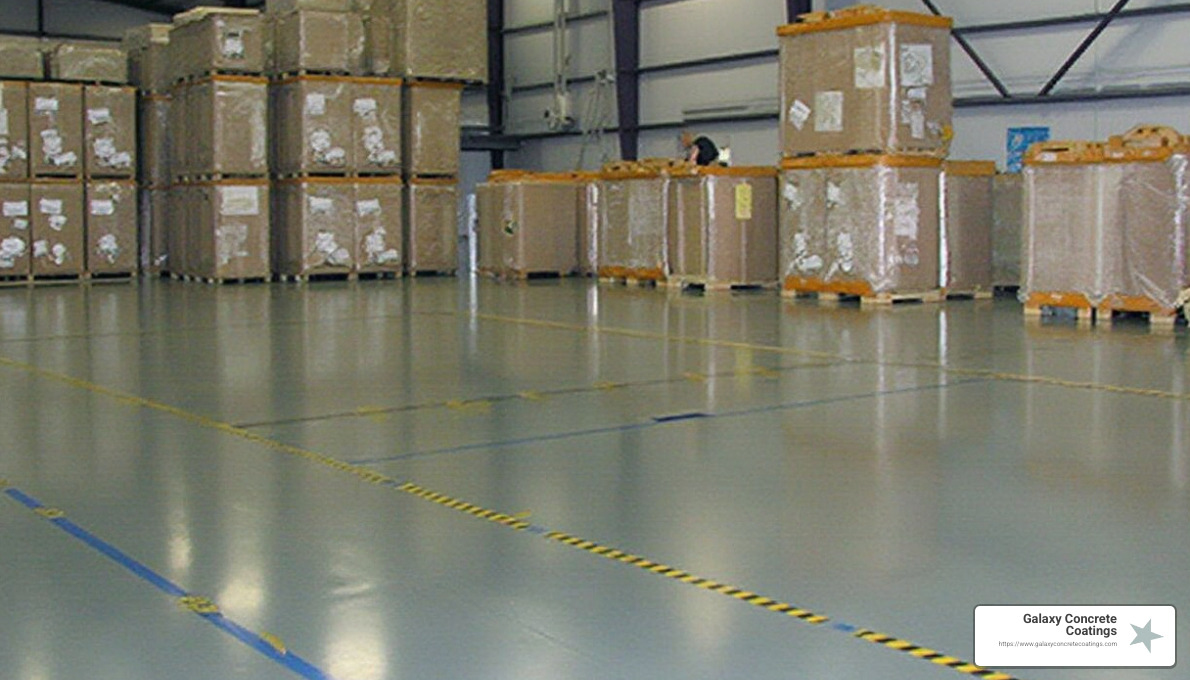
Factors Influencing Industrial Floor Solutions Selection
Let’s explore a few key factors in more detail, so you can confidently pick the best industrial floor solution for your operation.
Operational requirements play a big role here. If your facility never stops, or if shutting down for installation would severely impact your bottom line, the rapid one-day installation of polyaspartic coatings is a significant advantage. Facilities that deal with heavy equipment or vehicles need flooring with superior durability and flexibility. A polyaspartic floor effortlessly withstands heavy loads, impacts, and movements, unlike epoxy coatings that can crack or chip.
Consider how your facility’s safety and regulatory compliance needs will shape your flooring choice. Areas needing slip resistance or strict sanitation standards require specially designed surfaces. Polyaspartic coatings provide seamless, non-porous surfaces that eliminate hiding places for bacteria, making them ideal for food, pharma, or healthcare environments. They can also be custom to meet specific certifications like USDA approval or static dissipative requirements.
From a long-term cost-effectiveness standpoint, the true cost of your flooring includes installation downtime, maintenance expenses, and replacement frequency. One automotive manufacturing client finded that while polyaspartic flooring cost about 20% more initially compared to epoxy, they ended up saving around 40% over ten years, thanks to fewer disruptions and lower long-term repair costs.
Lastly, environmental considerations matter more than ever. Choosing low- or zero-VOC products helps protect air quality and keeps your facility eco-friendly. Polyaspartic coatings have formulations with very low or zero VOC levels, far better for your team’s health and the environment. Their longer life also reduces waste, as fewer replacements mean less environmental impact overall. Additionally, their reflective surfaces can even reduce lighting energy expenses.
By thinking carefully about these factors and aligning them with your facility’s unique requirements, you can confidently choose the ideal industrial floor solution. For most industrial settings, polyaspartic coatings represent the smartest, most durable, and safest choice for long-term performance and value.
To learn more about why polyaspartic coatings outperform traditional epoxy floors, check out our detailed comparison Epoxy vs. Polyaspartic Floor Coatings.
Conclusion
Throughout this guide, we’ve uncovered just how critical choosing the right industrial floor solutions is for your facility’s productivity, safety, and overall efficiency. While there are several coating options out there, it’s clear that polyaspartic coatings stand out as the top choice for today’s demanding industrial environments.
Time really is money in industrial settings—and any downtime hurts. Unlike epoxy coatings, polyaspartic coatings offer incredibly fast installation and curing. Most facilities can have their floors installed and ready for full use in just one day. Compare that to epoxy, which can take up to a week or more, and the advantage quickly becomes clear.
Polyaspartic coatings aren’t just faster—they’re tougher, too. They deliver exceptional durability, resisting heavy machinery traffic, impacts, abrasions, and even harsh chemical spills. Plus, their UV stability means they won’t yellow or fade like epoxy coatings commonly do, giving your floors a consistent, professional appearance that lasts years, not just months.
When you look long-term, polyaspartic coatings offer unbeatable value. While the upfront investment may be slightly higher than basic epoxy coating systems, polyaspartic floors require far fewer repairs and maintenance. They’re built to last, often outperforming epoxy systems by years—saving you money and hassle in the long run.
No two facilities are exactly alike, and polyaspartic coatings adapt easily to your specific needs. Whether you’re handling food processing, industrial manufacturing, or heavy equipment, these coatings can be customized to provide the exact level of slip resistance, durability, and aesthetics you require. What’s more, their low-to-zero VOC formulations make them an environmentally friendly choice, promoting healthier air quality and workplace safety.
At Galaxy Concrete Coatings, we’ve become industry leaders by specializing exclusively in advanced polyaspartic industrial floor solutions. Our proprietary coating systems come backed by a lifetime warranty (for residential applications) and extended warranties for commercial and industrial installations. We’re proud of our exceptional performance record, rapid installations, and the satisfaction we’ve brought to countless businesses.
From warehouses and manufacturing plants to automotive facilities and food-processing centers, our experienced team has transformed industrial spaces efficiently and effectively. And because we install quickly—often in just one day—we help keep your business running smoothly with minimal disruption.
Ready to learn more about how Galaxy Concrete Coatings can transform your facility? Visit our Industrial Floor Solutions page for more information.
We proudly serve customers throughout Colorado, Arizona, Indiana, and Greater Cincinnati, with local teams ready to help you in Denver, CO, Phoenix, AZ, Tucson, AZ, Indianapolis, IN, and Cincinnati, OH. Reach out today and let’s discuss how our polyaspartic concrete flooring solutions can improve safety, reduce downtime, and deliver long-term cost savings for your business.
