

Repair and Resurface: The Best Pool Deck Services
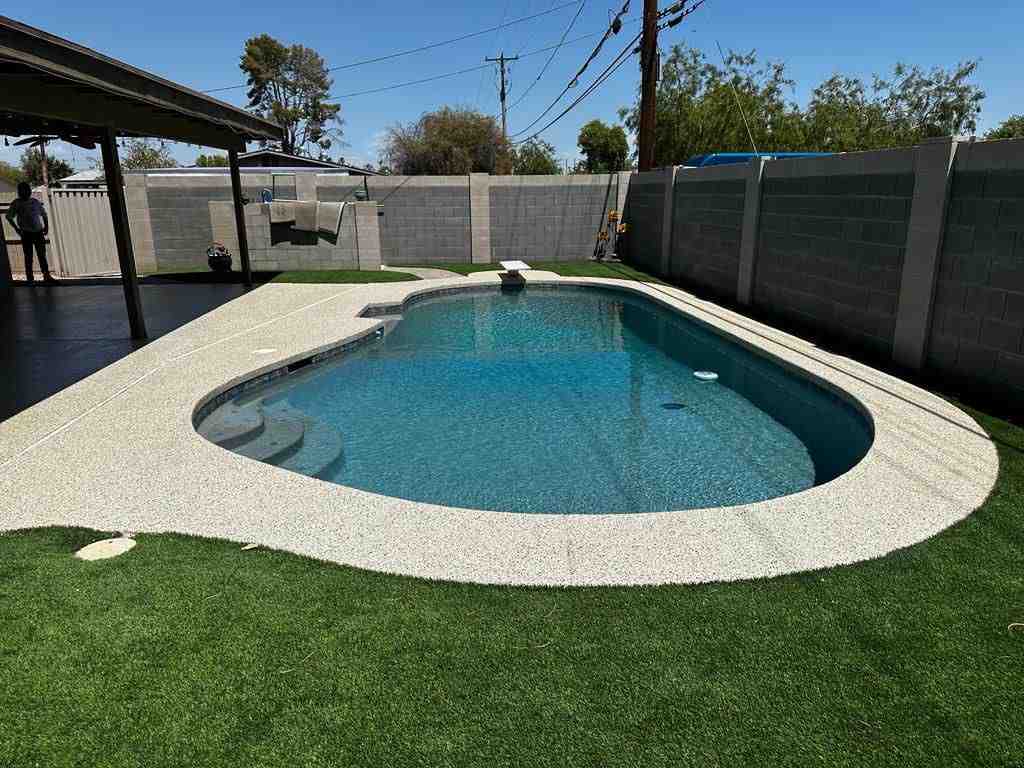
Why Pool Deck Repair Services Matter for Your Home
If you’re concerned about cracks, uneven surfaces, discoloration or other issues around your pool area, you’re probably looking into pool deck repair services. Here’s the quick answer to help you right away:
- Common Problems: Cracks, uneven concrete, chipping, discoloration, hollow spots.
- Repair Methods: Polyurethane leveling (like PolyLevel®), polyaspartic coatings (preferred over epoxy), concrete resurfacing, overlays.
- Cost Range: Typically ranges from $4 to $8 per square foot, depending on your deck’s complexity.
- Repair Duration: Most repairs can be completed within 1-2 days, with polyaspartic coatings drying within hours for quick usage.
Your pool deck isn’t just concrete—it’s a safety feature and a core part of your home’s aesthetic. Left unaddressed, minor issues can quickly turn into significant safety hazards or costly problems down the road. For example, settling soil creates hollow areas that cause cracks or uneven surfaces, affecting both the looks and function of your pool area. According to industry statistics, a well-maintained concrete pool deck can even boost your property value by 15% or more.
I’m Hayley, Galaxy Concrete Coatings Manager, and I’ve spent years helping homeowners and businesses transform their spaces through durable and beautiful pool deck repair services, leveraging superior polyaspartic coatings. I’ll guide you clearly through your options.
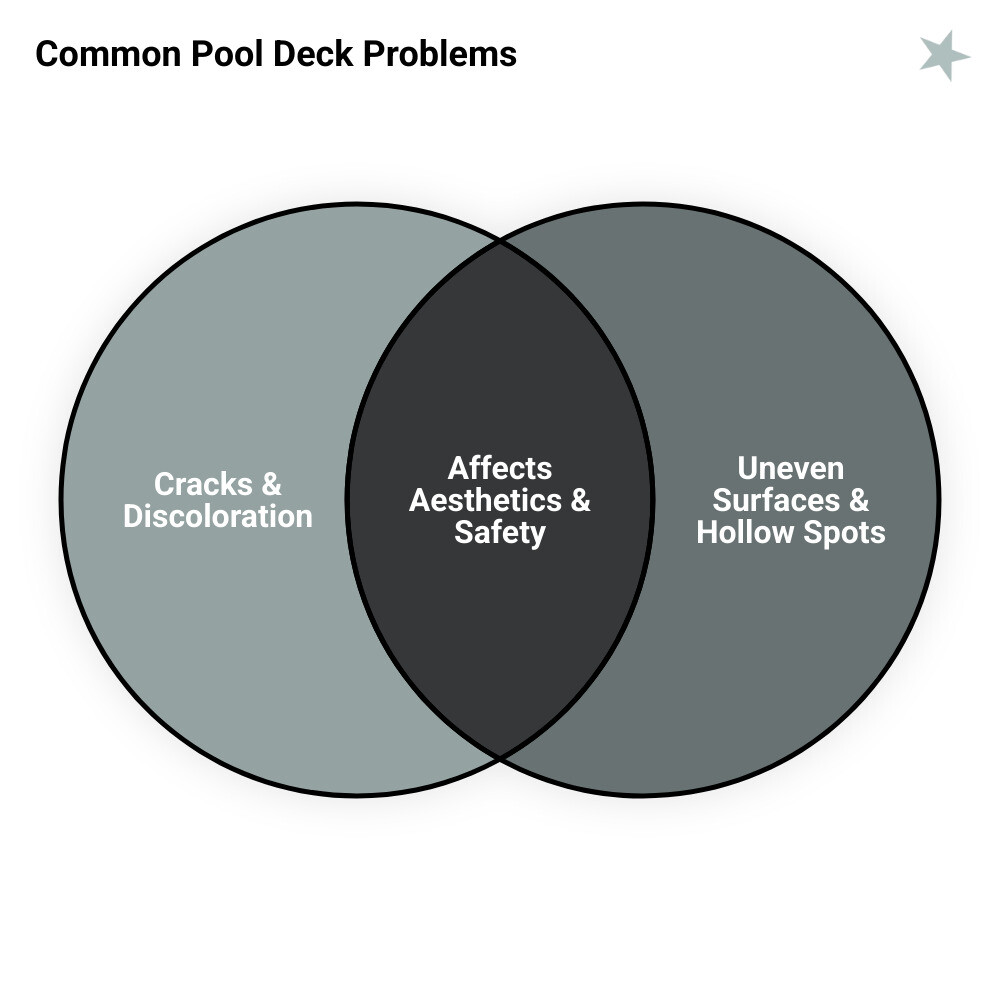
Common Signs Your Pool Deck Needs Repair Services
Your pool deck is more than just concrete surrounding water—it’s where summer memories are made. But like anything exposed to the elements, it won’t last forever without proper care. Recognizing the early warning signs of deterioration can save you thousands in repairs and prevent accidents. Here’s how to tell when it’s time to call for pool deck repair services.
Cracked Concrete
Those lines zigzagging across your pool deck aren’t just cosmetic issues—they’re your concrete’s way of crying for help.
Hairline cracks might seem insignificant now, but they’re open invitations for water to seep in, freeze, and expand, turning minor issues into major headaches. Spider cracks that form web-like patterns often indicate the concrete shrank too quickly during initial installation. The most concerning are structural cracks wider than ¼ inch, which suggest foundation problems beneath your deck.
“Small cracks can quickly expand into larger, costlier problems if not addressed in a timely manner,” our repair team often reminds homeowners. This is particularly true if you live somewhere with hot summers and cold winters, where temperature swings put extra stress on concrete.
Uneven Surfaces
If your pool deck feels more like a mini golf course with unexpected dips and rises, you’re dealing with concrete settlement issues.
When sections of your deck start sinking, it usually means the soil underneath has eroded or compressed. Raised edges might indicate tree roots pushing upward or frost heave in colder climates. You might also notice water pooling in certain areas instead of draining properly after rain or pool splashes.
These uneven surfaces aren’t just eyesores—they’re tripping hazards waiting to happen, especially when children are running around with wet feet.
Spalling
When your pool deck starts looking like it has a bad case of concrete dandruff, that’s spalling—and it’s a clear sign you need pool deck repair services.
Spalling happens when the top layer of concrete flakes, peels, or chips away. The main culprits? Freeze-thaw cycles where water penetrates the surface, expands when frozen, and pushes pieces of concrete off. Poor initial installation with improper mixing or finishing can make your deck more vulnerable to this issue. Even your pool chemicals can contribute to deterioration if the concrete wasn’t properly sealed.
Once you notice rough patches or loose concrete pieces, it’s time to address the problem before it spreads across your entire deck.
Discoloration
While concrete naturally has some color variation, significant changes in appearance often signal underlying issues.
That white, chalky substance appearing on your deck? It’s efflorescence—mineral salts being drawn to the surface by moisture. Green or black spots, especially in shaded areas, likely indicate algae or mold growth. And those rust-colored stains might be from pool chemicals or metal furniture left out in the rain.
Beyond looking unappealing, these discolorations often point to moisture problems that could eventually compromise your deck’s structural integrity.
Water Damage
Water is your pool deck’s worst enemy, even though that seems ironic for a surface designed to surround water.
Listen for hollow sounds when walking across your deck—this indicates voids beneath the surface where soil has washed away. Check the edges of your deck for erosion, where you might see soil disappearing from underneath. Areas that stay damp long after the rest of the deck has dried suggest water is being trapped within the concrete.
As one customer noted after our repair service: “I had no idea the hollow sound when walking across certain areas of my deck meant there were voids underneath. Addressing this early saved me from a complete deck replacement.”
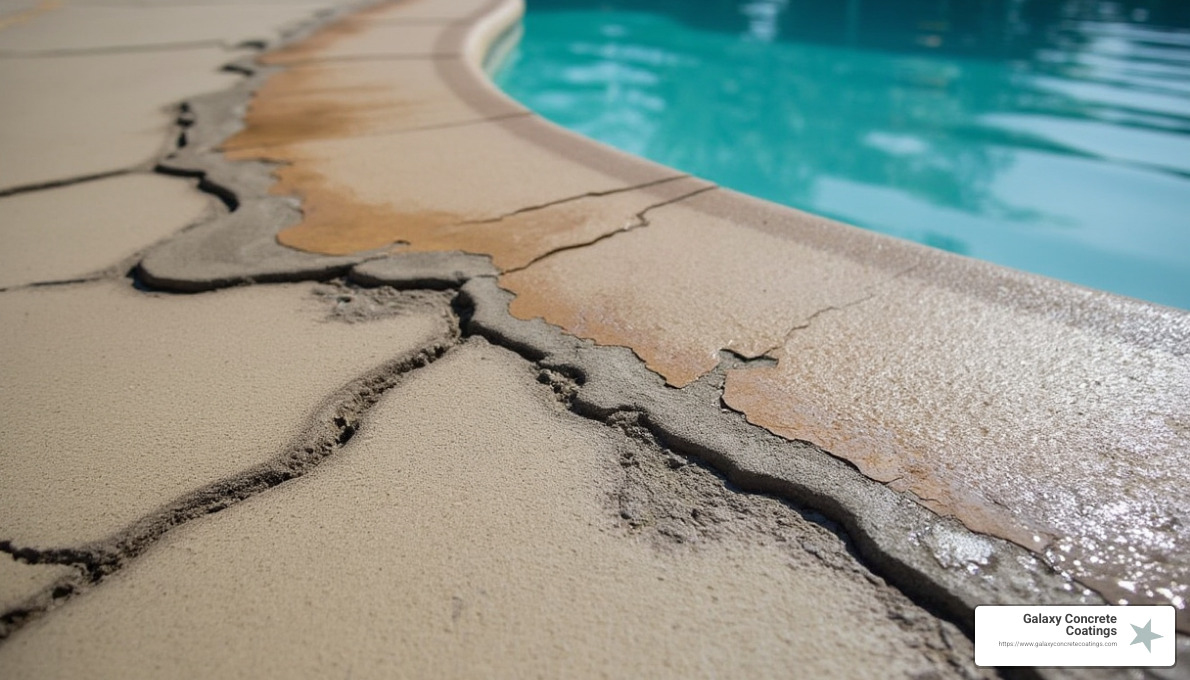
Safety Hazards of Damaged Pool Decks
The dangers of a deteriorating pool deck go far beyond unsightly appearances—they can put your family and guests at serious risk.
When pool deck surfaces wear down, they lose their slip-resistant properties right where you need them most. Thousands of pool-related injuries each year come not from the water itself but from slips on wet decking. Those uneven surfaces and widening cracks create perfect conditions for trips and falls, which are especially dangerous for children darting around the pool or elderly visitors with mobility challenges.
As concrete breaks down, it can develop jagged edges that turn barefoot walks into painful experiences. Cuts and scrapes around pools are particularly concerning as they can easily become infected. Beyond immediate injuries, compromised structural integrity could lead to deck collapse in severe cases or damage to your pool shell.
There’s also the liability aspect to consider. As a pool owner, you have both moral and legal responsibilities to maintain a safe environment. Insurance companies may deny claims related to injuries on poorly maintained pool decks, and your property value can take a significant hit when potential buyers spot obvious safety hazards.
“Peeling or chipping pool decking is unsightly and can be repaired at a modest price if caught early,” our repair team explains. “Sometimes the deck will need resurfacing, but addressing safety issues promptly is always less expensive than dealing with accidents or litigation.”
How Weather and Usage Impact Pool Deck Durability
Your pool deck faces a perfect storm of challenges that accelerate wear and tear, especially in regions with diverse weather conditions.
In areas with cold winters, the freeze-thaw cycle is particularly destructive. Water seeps into tiny cracks, freezes, expands, and creates larger cracks—a vicious cycle that can transform minor imperfections into major damage within just a few seasons. Meanwhile, relentless UV exposure breaks down sealers and protective coatings while causing thermal expansion and contraction that leads to cracking. Those hot summer days that make the concrete too hot for bare feet are actually damaging your deck’s surface.
Your pool deck also faces a constant chemical assault. Chlorine and other treatment chemicals, sunscreen, tanning products, and cleaning agents all penetrate concrete over time. For saltwater pools, the salt itself accelerates deterioration if not properly managed.
The way you use your deck matters too. Heavy foot traffic creates predictable wear patterns—entry and exit points show accelerated damage, areas around furniture experience concentrated pressure, and spots where people commonly stand develop premature aging.
Seasonal temperature changes force concrete to expand and contract, creating stress that manifests as cracks along control joints or separation from coping. And beyond freeze-thaw concerns, constant moisture exposure promotes algae growth and weakens the concrete matrix over time.
As one customer testimonial notes: “We knew our Arizona pool deck would face extreme heat, but we didn’t realize how quickly that would deteriorate our old concrete surface. The polyaspartic coating has made such a difference in both comfort and durability.”
When you’re ready to protect your investment with professional pool deck repair services, consider upgrading to polyaspartic coatings. Unlike traditional epoxy coatings, polyaspartics offer superior UV resistance, flexibility, and durability—perfect for the demanding pool environment. They cure faster too, meaning less downtime for your family’s summer fun.
Professional Pool Deck Repair Services Explained
When your pool deck starts showing signs of wear and tear, turning to experienced professionals can make all the difference. Professional pool deck repair services don’t just patch problems—they diagnose and fix them properly, ensuring your outdoor living area remains safe, attractive, and durable for years to come. Let’s take a closer look at what professional service entails, step by step.
Surface Preparation
The success of your pool deck repair project begins with thorough surface preparation—it’s the foundation of everything else professionals do. The first step typically involves cleaning and inspection, where technicians use powerful pressure washers to remove dirt, algae, mold, and loose concrete material. This deep cleaning unveils the real state of your deck, allowing technicians to accurately assess damage.
Next comes a detailed damage assessment. Professionals carefully identify every crack, hollow spot, spalling area, and other imperfections that need attention. Proper surface profiling ensures the repaired surface properly bonds to the coatings or repair materials applied later. Techniques such as diamond grinding, shot blasting, or etching are used to give the concrete just the right amount of roughness for a strong bond.
Because moisture is a common enemy of concrete repairs, technicians always carry out moisture testing. By checking how much moisture the concrete holds, they ensure that the coatings or fillers applied later will cure and adhere correctly. As our technicians often say, “The prep work might not be glamorous, but it makes or breaks how long your repair lasts!”
Crack Repair
Not all cracks are created equal, and professional repair services understand that each type needs a specific approach. Smaller, hairline cracks can often be tackled with flexible crack fillers specially designed for concrete surfaces. For more significant, structural cracks, technicians may widen or “route” the crack to allow a high-strength epoxy or polyurea filler to bond fully. In severe cases, carbon fiber reinforcement might be used to ensure long-term durability and stability.
Some cracks move with temperature changes or shifting soil, known as moving cracks. Professionals handle these by using flexible materials specifically designed to move along with the concrete, effectively preventing future cracks from forming in the same spot.
Concrete Leveling
If your pool deck has uneven surfaces—areas that sink, dip, or tilt—it’s more than just visually unappealing; it’s a serious safety risk. Luckily, experts have quick, non-invasive solutions like polyurethane injection (such as the PolyLevel® System). Technicians drill tiny holes through the deck and inject a specialized foam that expands beneath the surface, filling voids and gently lifting your concrete back into place. This process is quick, clean, and minimally disruptive compared to older methods like mud-jacking.
For very minor level differences, technicians might use grinding to smooth out high spots, providing immediate relief from trip hazards. Whichever method is chosen, the goal is always a safe, smooth, walkable surface you can enjoy worry-free.
Resurfacing Options
Sometimes, your pool deck might be structurally sound underneath but look tired or worn on the surface. In these cases, resurfacing is a cost-effective alternative to replacement. Popular resurfacing solutions include:
- Microtoppings, thin cement layers that create a brand-new, smooth concrete look.
- Stamped overlays that replicate stylish textures like natural stone, brick, or tile.
- Spray textures, applied to provide slip-resistant surfaces ideal for poolside safety.
- Polyaspartic coatings, a cutting-edge system that surpasses traditional epoxy coatings in terms of durability, UV resistance, and quick curing for fast return-to-use.
At Galaxy Concrete Coatings, we specialize in polyaspartic coatings because they outperform epoxy coatings significantly, offering better UV protection, chemical resistance, and durability. Plus, their fast curing means minimal downtime for your pool deck—often usable within a single day! You can read more about why polyaspartic coatings outperform epoxy here.
Sealing Techniques
Once your pool deck repair or resurfacing project is completed, sealing is the final touch that protects your investment. Professionals usually recommend either penetrating sealers that soak into the concrete, providing invisible protection without changing the look—or film-forming sealers that create a visible protective layer, enhancing color and giving your deck a polished finish.
Professionals also ensure that any expansion joints (spaces intentionally placed to allow concrete movement) are properly sealed. This prevents water from seeping in and causing further damage, allowing your deck to naturally expand and contract without cracking.
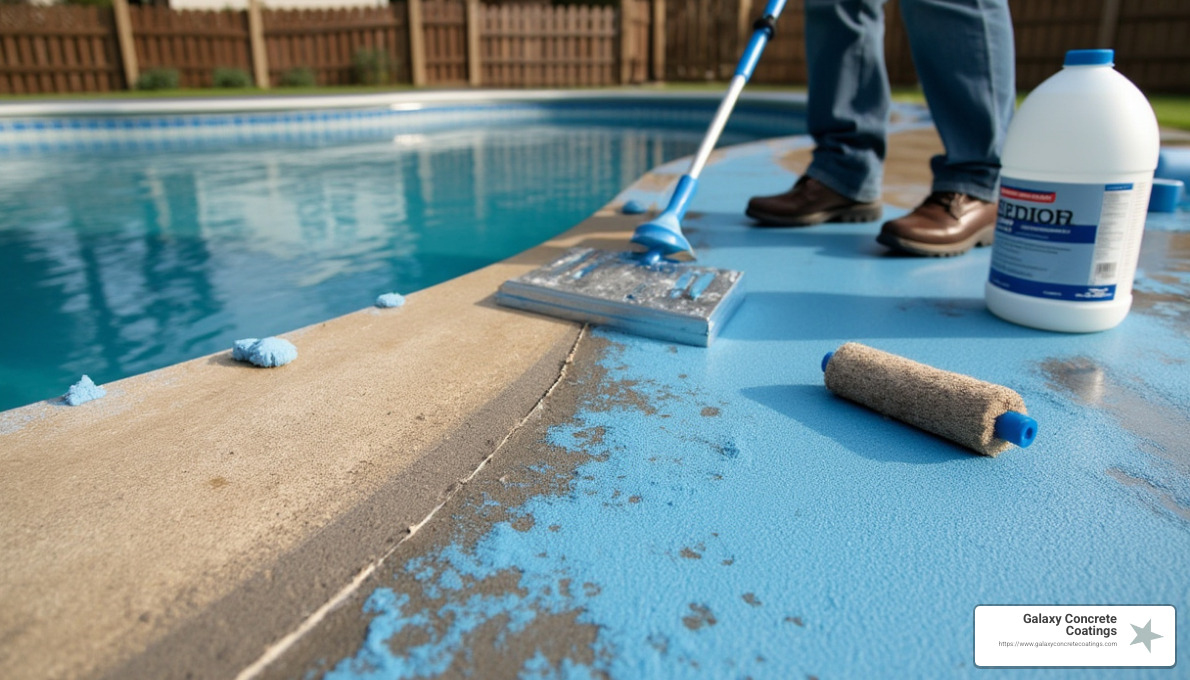
The PolyLevel® System for Pool Deck Repair
The PolyLevel® System has revolutionized pool deck repair services by providing an efficient, minimally invasive solution to uneven concrete. Technicians drill small, strategically placed holes (about the size of a penny) into affected areas. A specialized polyurethane foam is then injected beneath the slab, expanding to fill voids and gently lifting the concrete back into position.
This system offers several advantages over traditional methods:
- It’s lightweight, preventing additional strain on the soil below.
- It completely fills voids, providing stable long-term support.
- Curing happens rapidly—typically within hours—meaning you can use your pool deck the very same day.
- The material is highly water-resistant, so it won’t wash away like traditional mud-jacking materials.
As one delighted customer shared: “Our uneven deck was fixed so quickly, we were swimming again the same afternoon, and the repair has held beautifully ever since!”
Epoxy and Polyaspartic Coatings for Pool Decks
While epoxy coatings are well-known in concrete protection, modern polyaspartic coatings significantly outperform traditional epoxy. Polyaspartic coatings offer superior durability and longevity, especially important for heavily used outdoor pool areas exposed to harsh sunlight and pool chemicals.
Compared to epoxy, polyaspartic coatings provide:
- Exceptional chemical resistance, preventing damage from chlorine, sunscreen, and cleaning agents.
- Outstanding UV stability, meaning your pool deck won’t yellow, fade, or degrade under sunlight.
- Superior slip resistance, customizable with textured additives for safety.
- Decorative flexibility, including an unlimited range of colors, flake patterns, metallic finishes, and custom designs.
In terms of durability, polyaspartic coatings are highly impact resistant, remain flexible enough to handle temperature fluctuations, and maintain their protective properties with lifetime warranty or more—far surpassing the 3-5 year lifespan of epoxy coatings.
Because polyaspartic coatings dry quickly, your pool deck can often be ready for use within just a day, unlike epoxy coatings that may take several days to cure. As our customer Timothy Dodge enthusiastically noted, “We absolutely love our backyard, and the coating makes the whole pool deck and patio pop!”
To learn more about choosing the best concrete coating for your needs, check out our guide here: How to Choose the Best Concrete Coating.
With professional pool deck repair services, you can restore your pool deck’s beauty, ensure your family’s safety, and protect your investment for years to come.
Popular Pool Deck Resurfacing Options
When repairs just aren’t enough to restore your pool deck’s charm, resurfacing is the way to go. Resurfacing means applying a new surface on top of your existing concrete, completely changing your outdoor space without the hassle and expense of replacement. Here, I’ll walk you through some of the most popular resurfacing options homeowners often choose when investing in pool deck repair services.
Stamped Concrete
If you love the look of stone, brick, or even wood—but not the hefty price tag—stamped concrete might be perfect for you. With numerous versatile patterns like natural stone, brick, tile, or wood plank, stamped concrete provides high-end aesthetics at a fraction of the cost. The color possibilities are also impressive, with integral colors, stains, or color hardeners, giving you rich and vibrant tones. Plus, texture levels can range from subtle to bold, adding extra visual appeal and slip resistance.
The best part? When properly prepared, stamped concrete can be applied directly over your existing surface, creating a seamless change without the hassle of a full tear-out.
Ever felt like you’re dancing on hot coals when stepping onto your pool deck in summer? You’re not alone! That’s why homeowners living in sunny climates often opt for cool deck coatings. These specially-designed coatings significantly reduce deck temperatures—by up to 20 degrees compared to standard concrete—making barefoot walking enjoyable even on scorching summer days.
Besides being gentle on bare feet, cool deck coatings offer excellent slip resistance, essential around water. Available in a variety of light, reflective colors, these coatings help keep your outdoor area comfortable and inviting, even in the hottest months.
Pavers
Looking for something durable, attractive, and easy to maintain? Consider using concrete pavers. These interlocking pieces create a stable, eye-catching surface that’s resistant to shifting and cracking. If individual pavers become damaged, replacing them is quick and easy—no need to tear up the whole deck.
Pavers come in permeable options too, allowing water to drain through naturally and preventing puddles and runoff issues. This makes them especially useful in areas prone to heavy rain or freeze-thaw cycles.
Exposed Aggregate
For timeless charm paired with robust slip resistance, homeowners often choose exposed aggregate finishes. The surface reveals natural stones within the concrete, creating a stunning, durable texture that’s both safe underfoot and visually appealing.
You can customize the look by selecting different colors and types of aggregate, from subtle river pebbles to bold colored stones. An exposed aggregate surface holds up beautifully against daily wear and tear, making it a classic choice for pool decks needing long-lasting beauty and performance.
Decorative Overlays
Want the freedom to fully customize your pool deck’s look without extensive demolition? Decorative overlays offer just that! These thin concrete-like coatings can refresh your existing deck, adding only 1/4 to 3/8-inch thickness, so you don’t have to worry about interfering with existing structures like steps or coping.
With decorative overlays, you can choose from practically unlimited design options. Whether you love custom colors, stamped patterns, or unique textures, professional installers can create a design custom precisely to your taste. The installation process is quick, and you’ll have a brand-new, eye-catching deck ready to enjoy in no time.
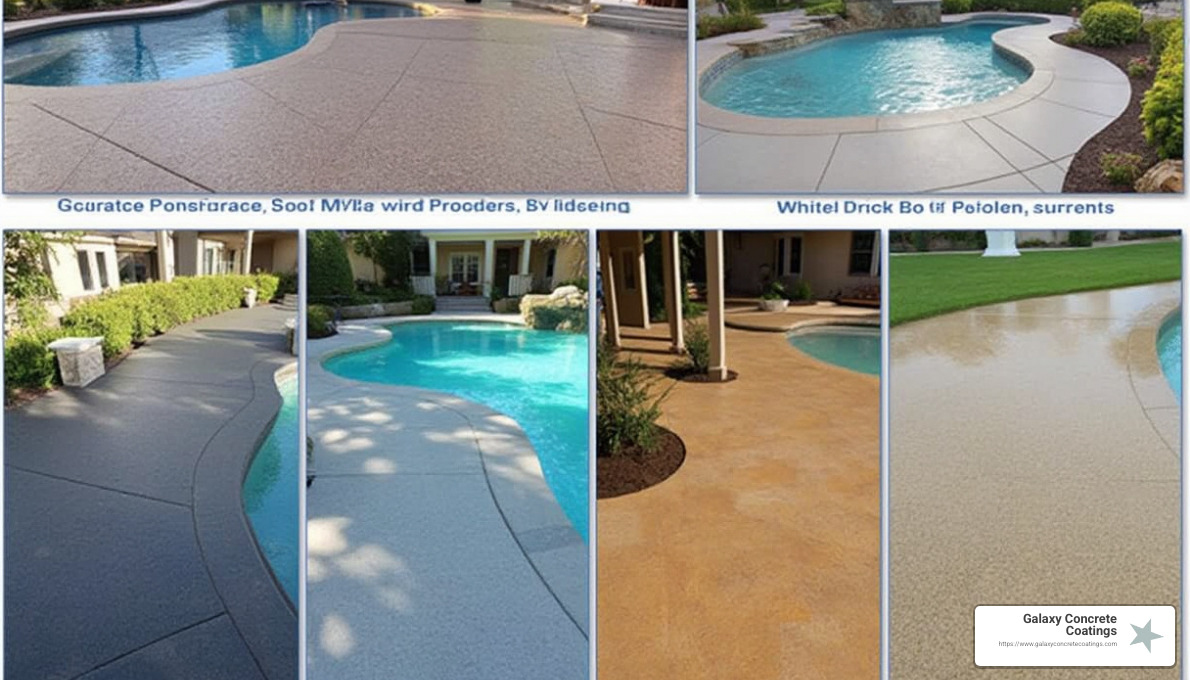
Concrete Overlay Systems for Complete Change
Sometimes you need a total makeover—but breaking up and removing your entire deck sounds overwhelming, right? Enter concrete overlay systems, a game-changer in pool deck resurfacing. These thin, cement-based materials can completely revamp your deck’s appearance without significant structural changes.
Overlay systems are available in ultra-thin microtopping layers (as thin as 1/16-inch!), self-leveling options, or spray-down applications that provide excellent slip resistance. Because they’re thin, overlays won’t significantly alter your deck’s elevation, making them ideal for renovation projects.
The customization possibilities are endless. Professional installers can create seamless, joint-free surfaces with custom colors, intricate patterns, and realistic textures like stone, tile, or wood. With integrated coloring, stains, dyes, and stamping techniques, overlays offer design flexibility you just can’t get with other materials.
As one delighted homeowner from Arizona told us, “Our seamless overlay transformed our outdated, cracked pool deck into a beautiful, safer, and modern outdoor living space.”
To see how concrete overlay systems can repair and improve your space, check out our Repair System page.
Whichever pool deck resurfacing option you choose, remember it’s always best to consult professionals. At Galaxy Concrete Coatings, we’re proud to offer superior polyaspartic coatings, known for their UV stability, chemical resistance, and longevity compared to traditional epoxy coatings. We serve homeowners like you across Colorado, Arizona, Indiana, and Greater Cincinnati, delivering beautiful, durable results you’ll love for years.
DIY vs Professional Pool Deck Repair: What You Should Know
When your pool deck starts showing signs of wear and tear, it’s natural to consider fixing it yourself. DIY repairs can seem like an enticing way to save money and enjoy the satisfaction of doing the job yourself. However, choosing between DIY and hiring professional pool deck repair services involves weighing several critical factors. Let’s explore what you need to know to make the best decision for your situation.
Cost Comparison
At first glance, DIY repairs might seem less expensive. You can purchase your materials directly, often at a lower initial cost—but that’s not the full story. You’ll also need to factor in the cost of renting or buying specialized equipment, the value of your personal time, and potential expenses from mistakes and do-overs.
Professional repairs typically come with a higher upfront cost because you’re paying for skilled labor and specialized materials. But when you look closely, you might find you’re actually getting excellent value: professionals use commercial-grade materials not available in retail stores, specialized equipment to ensure optimal results, and provide warranties covering both workmanship and materials. A professional job usually lasts much longer, making it a smarter investment over the long run.
As one concrete expert wisely points out, “DIY repairs might save you money today, but fixing mistakes or redoing inadequate work often costs more in the end.”
Skill Requirements
Not all pool deck repairs require the same skills. Some projects, like simple cleaning, minor crack filling, or resealing, can usually be handled by handy homeowners without too much trouble. But when you start talking about more challenging tasks—like concrete leveling, structural crack repair, or applying decorative finishes—the skill requirement jumps significantly.
Consider your own comfort level: If you don’t have experience working with concrete or coatings, it’s easy to underestimate the complexity. Professional repair teams have the technical know-how and hands-on experience to handle tricky issues safely and effectively. If you’re unsure or uneasy about tackling the project, it’s probably a good sign to call in the pros.
Equipment Needs
The truth is, quality pool deck repair requires specialized equipment. You might already have access to basic tools like a pressure washer or a trowel. But effective restoration—especially for surface preparation—often calls for diamond grinders, shot blasters, specialized sprayers, and concrete leveling systems.
Renting or purchasing this equipment isn’t cheap, and without the proper experience, it’s easy to accidentally cause more damage. Professionals come equipped with commercial-grade tools and safety gear to ensure a high-quality, hassle-free repair.
Time Investment
Let’s face it: your time is valuable. A DIY pool deck repair often involves a steep learning curve and lots of trial-and-error. Between researching methods, shopping around for materials, preparing the area, applying repairs, and waiting for curing, DIY projects can quickly stretch from days into weeks.
On the other hand, professional teams know exactly what they’re doing. Experienced crews follow established processes, use high-quality materials that cure quickly, and can often complete repairs in just a day or two. At Galaxy Concrete Coatings, our polyaspartic coatings cure rapidly, which means you can enjoy your beautifully restored pool deck even faster.
Quality Results
When done right, a professional repair job looks seamless and functions perfectly for years. Even talented DIYers often struggle to achieve the same consistent, polished finish. Without proper training and equipment, it’s easy to end up with uneven coatings, visible patchwork, or underlying problems left unfixed.
Hiring a professional team ensures you get consistent application, expert diagnosis of underlying issues, and the best materials for long-term durability. The difference in appearance and performance is often significant—and your pool area is an investment worth protecting.
Warranty Considerations
One of the biggest advantages of professional pool deck repair services is the warranty. DIY repairs typically don’t include any warranty—if something goes wrong, you’re responsible for the redo and the cost that comes with it.
When you hire professionals—like our team at Galaxy Concrete Coatings—you receive a warranty covering both materials and workmanship. We stand behind our polyaspartic coatings with a lifetime warranty, giving you peace of mind and clear recourse if any issues arise down the line.
When to Attempt DIY Pool Deck Repairs
There are definitely situations where tackling a DIY repair makes sense. If you’re dealing with minor cosmetic issues, small and stable cracks, or simple maintenance tasks, going DIY can be a practical option.
For instance, minor hairline cracks or surface crazing usually respond well to DIY solutions like specialized crack fillers made for pool decks. Basic pressure washing or removing light stains is also something homeowners often comfortably handle.
Applying a fresh sealer as part of regular maintenance can be manageable, too—provided you carefully prepare the surface, follow instructions, and choose appropriate products.
Small chips or edge damage can be addressed with patching compounds designed specifically for concrete surfaces. If you have budget constraints, a DIY approach for minor issues can often buy you some time until you can invest in comprehensive professional repairs.
Just keep in mind that proper research, quality materials, and careful surface prep are essential to a successful DIY outcome. The extra effort upfront can save headaches (and extra costs) later.
Benefits of Hiring Professional Pool Deck Repair Services
There’s a reason most homeowners turn to experienced professionals for pool deck repairs—actually, there are several!
First and foremost is expertise. Professionals diagnose the cause of your deck issues, not just the symptoms. They know exactly which repair methods will deliver lasting results, and their experience means they can spot and address problems a homeowner might overlook.
Specialized equipment is another big advantage. Professionals use powerful commercial-grade tools to prepare, repair, and finish your pool deck. These tools produce results DIY-grade equipment just can’t match, and they do it safely and efficiently.
Quality materials are also crucial. Our Galaxy Concrete Coatings team uses high-performance polyaspartic coatings—far superior to traditional epoxy systems in UV protection, durability, and ease of application. (You can learn more about the difference in our comprehensive guide: Polyaspartic vs. Epoxy Floor Coatings.)
Hiring professionals is also incredibly time-efficient. Instead of spending weekends (or weeks!) tackling DIY repairs, you’ll have your pool deck fixed and ready to use again quickly. We offer one-day installations in most cases, minimizing disruption and downtime.
Then there’s the peace of mind factor. Professional repairs come with guaranteed results and warranties to protect your investment. You won’t have to worry about costly do-overs or expensive mistakes.
Finally, professional-quality repairs provide excellent long-term value. They last significantly longer, require less ongoing maintenance, and improve your property’s value. In fact, a professionally restored pool deck can increase property value by 15% or more—a smart investment by any standard.
As one delighted customer shared, “We absolutely love our backyard, and the coating really makes the entire pool deck and patio pop!” With professional pool deck repair by Galaxy Concrete Coatings, you can feel confident your pool area will look amazing and perform beautifully for years to come.
Maintaining Your Pool Deck After Repairs
You’ve invested in professional pool deck repair services, and now you’re enjoying a beautifully restored outdoor oasis. But the work doesn’t end here—taking care of your pool deck is key to ensuring it stays safe, attractive, and comfortable for years. Let’s explore some practical tips to maintain your pool deck, keeping it in tip-top shape and protecting your investment.
Regular Cleaning
Keeping your pool deck clean is one of the simplest yet most effective ways to maintain it. A quick weekly rinse with a garden hose will help remove chlorine splash-out, dirt, leaves, and debris. Once a month, use a mild, pH-neutral detergent designed specifically for your type of pool deck coating to give it a more thorough cleaning.
A deeper clean every few months is also important, especially if your deck sees heavy use or frequent pool parties (lucky you!). Avoid harsh chemicals like bleach or ammonia, as these can damage your deck’s protective coatings and sealers. And while pressure washing can be helpful, it’s best to ask a professional first to avoid accidentally damaging your beautiful new surface.
Seasonal Inspection
Think of seasonal inspections as regular checkups for your pool deck. As the seasons change, so do the challenges your deck faces.
In spring, check carefully for any winter damage, such as small cracks from the freeze-thaw cycle. Summer is the ideal time to spot UV damage or wear on your coatings, while fall inspections can help you identify issues to address before winter sets in—like worn expansion joints or pool coping transitions.
After winter, do a quick assessment again to see how your deck handled the colder months. Pay close attention to areas that often hold water or any spots near drains and skimmers. Staying proactive will help you catch and fix minor issues before they become costly repairs.
Prompt Repairs
Quickly addressing small problems is one of the smartest moves you can make for your pool deck. If you notice new cracks forming or areas where your coating is lifting, take immediate action. Small cracks might seem harmless, but water infiltration can lead to structural damage down the line.
The same goes for worn areas in your deck’s coating or sealer—touching up these spots quickly prevents further deterioration. Also, remember those expansion joints? They’re designed to absorb movement, so keeping them in good shape is essential.
Chemical Management
Proper pool chemical management not only protects swimmers—it also extends your deck’s life. Maintaining the correct balance of chlorine, pH, and other chemicals in your pool water prevents chemical-related damage to your deck’s surface.
Promptly rinse chlorine or chemical splashes off your pool deck. And store pool chemicals safely away from your deck surface to avoid accidental spills. Galaxy Concrete Coatings’ polyaspartic coatings offer excellent chemical resistance compared to epoxy, but even the best materials benefit from proper chemical care.
Furniture Protection
Believe it or not, your pool furniture can cause significant wear and tear on your deck if you’re not careful. Always use furniture pads designed specifically for outdoor use (and replace them when worn). Lift furniture instead of dragging it across the deck to prevent scratches and gouges. If you have heavy furniture or metal items prone to rusting, use protective pads or platforms beneath them to distribute weight and prevent staining.
One of our technicians once joked, “You’d be surprised at how much damage a harmless-looking deck chair can cause when pulled repeatedly across a beautiful new deck.” Protecting your deck from furniture damage isn’t expensive—it’s just good sense!
Preventative Measures to Extend Pool Deck Lifespan
Proper drainage is essential when it comes to keeping your pool deck healthy. Make sure the deck slopes correctly so water drains off effectively—typically about 1/4 inch of slope per foot is recommended. Keep drains clear and address any pooling water immediately.
Furniture pads are another secret weapon. Choose UV-resistant pads designed for the outdoors, and regularly inspect them to make sure they’re still in good condition. They’re inexpensive and easy to replace, especially compared to repairing scratches and gouges later.
Choosing UV-resistant sealers can pay off significantly, especially if your pool deck gets a lot of sun exposure. Galaxy’s polyaspartic coatings naturally provide superior UV protection over traditional epoxy options, helping your deck maintain brilliant color and structural integrity even under intense sunshine.
In colder climates, take extra care for winter protection. Clear your deck thoroughly before winter arrives, check sealers and expansion joints, and use gentle snow removal methods. Avoid harsh ice melt chemicals or heavy metal shovels that can damage your deck surface.
Chemical balancing is another essential prevention strategy. Regularly check and adjust your pool water chemistry, rinse off chemical splashes, and consult professionals for annual chemical management to ensure your pool deck remains safe and attractive.
Regular resealing helps maintain your deck’s protective barrier. The good news? Galaxy’s polyaspartic coatings last far longer than traditional sealers, meaning fewer resealing jobs for you. Follow manufacturer recommendations on resealing intervals, and watch for signs like water absorption or fading color that indicate it’s time to freshen up your protection.
Seasonal Maintenance Schedule for Pool Decks
While maintaining your deck doesn’t have to be complicated, having a routine helps. During spring, give your pool deck a deep clean and thorough inspection after winter’s harsh weather. Summer is all about regular rinsing, monthly cleaning, and staying alert for emerging problems.
In the fall, prepare your deck by removing debris, checking and repairing small issues, and touching up sealers if needed. Winter is a time for gentle snow and ice removal and regular checks for weather-related damage.
Finally, once a year, consider calling in a professional for a detailed assessment. They’ll catch issues you might miss and advise you on the best long-term maintenance practices. With proper care, a professionally restored pool deck—particularly one protected by Galaxy’s advanced polyaspartic coatings—can easily last a decade or more. It’s a small investment of time and care for many years of worry-free enjoyment around your pool.
Frequently Asked Questions About Pool Deck Repair Services
When you’re thinking of investing in pool deck repair services, you’re bound to have questions. Here are answers to some of the most common inquiries homeowners have when considering pool deck repairs and resurfacing.
How Much Does Pool Deck Repair and Resurfacing Cost?
The cost of pool deck repair services varies widely depending on several factors. Let’s break it down clearly so you can plan your budget.
The main driver of cost is square footage. Smaller pool decks under 500 square feet typically range from around $2,000 to $4,000 for a full resurfacing job. Medium-sized decks between 500 and 750 square feet usually fall into the range of about $4,000 to $6,000. Larger decks exceeding 750 square feet can cost between $6,000 and upward of $10,000, depending on the complexity and materials chosen.
Another significant factor is the extent of existing damage. Minor repairs, such as fixing small cracks or discoloration, may only cost between $500 and $1,500. Moderate repairs—bigger cracks, minor leveling, or some surface deterioration—could bring the cost up to around $1,500 to $3,000. Major repairs like structural cracks, extensive leveling, or significant water damage generally run between $3,000 and $5,000 or more before resurfacing.
Your choice of materials also affects your total cost. Basic concrete resurfacing typically costs around $4 to $6 per square foot, whereas more decorative overlays like stamped or textured finishes could be $7 to $12 per square foot. Premium finishes or high-end designer coatings, such as our polyaspartic coatings, usually range from about $6 to $10 per square foot. While these might have a higher upfront cost, their outstanding durability and low maintenance requirements often make them the best long-term value.
Labor costs vary by region and the complexity of the project. Urban areas tend to have higher labor costs, and intricate designs or challenging access points can increase these fees. Seasonal demand fluctuations and local material availability also play a role in pricing.
In general, you’ll find an economy package between $4 to $6 per square foot, mid-range solutions around $6 to $8 per square foot, and premium finishes from $8 to $12 or more per square foot.
At Galaxy Concrete Coatings, we carefully assess your pool deck’s condition and your preferences to provide transparent, detailed quotes. That way, you can confidently choose a solution that fits your needs and your budget.
How Long Does a Typical Pool Deck Repair or Resurfacing Take?
We understand you’re eager to have your pool deck back to full use as quickly as possible, so let’s talk timelines.
The preparation phase typically takes one to two days. During this stage, we’ll inspect your pool deck, order materials, and thoroughly prepare the surface to ensure excellent adhesion. This may involve grinding, cleaning, and fixing existing cracks. Some repairs might require an additional 24 to 48 hours of curing before we move on.
The application process duration depends on the repair method you choose. Basic repairs and straightforward resurfacing projects generally require just one to two days. Decorative overlay systems with multiple layers and textures might take two or three days to complete.
At Galaxy Concrete Coatings, our polyaspartic coating systems offer a distinct advantage—most installations are completed in just one day. Yes, that means your pool deck can typically be resurfaced and ready for use within 24 hours! Compare that to traditional methods like epoxy coatings or standard concrete overlays, which often take three to seven days before you can safely walk on them, and the choice becomes clear.
Weather can also impact timelines. Ideal application conditions involve stable temperatures and low humidity. Rain or unexpected weather patterns can cause delays. That’s why we carefully monitor forecasts and schedule your project accordingly.
Once the project is complete, you can usually resume foot traffic within hours on polyaspartic coatings. Furniture can typically go back onto your deck within 24 to 48 hours, and your space will be fully cured within five to seven days. This rapid return to full use is one reason homeowners appreciate polyaspartic coatings so much.
What Should I Look for When Choosing a Pool Deck Repair Service?
Choosing the right contractor for your pool deck repairs is essential—you want lasting, high-quality results that boost your home’s value and improve safety.
First and foremost, consider their experience. Look for a contractor who specializes specifically in pool decks rather than general concrete work. Reviewing their portfolio is also essential—ask to see before-and-after photos of projects similar to yours. Notice details like edges, coping transitions, and the overall finish quality.
Warranties are another vital factor. Reputable companies offer clear, robust guarantees that cover both materials and workmanship. At Galaxy Concrete Coatings, we proudly stand behind our polyaspartic coatings with a lifetime warranty, illustrating our confidence in both product and installation.
Don’t forget to check reviews and testimonials. Happy customers tend to share their experiences openly, and you can find detailed reviews on sites like Google, Yelp, or directly from past customers. One of our satisfied customers, Timothy Dodge from Tennessee, shared, “We absolutely love our backyard and the coating really makes the entire pool deck and patio pop!”
Verify the contractor’s insurance coverage as well. Adequate liability insurance, workers’ compensation, and bonding ensure you’re protected against unexpected issues or accidents during the repair project.
Lastly, assess the quality of materials used. Professional-grade products significantly outperform the retail-grade materials you’ll find at home improvement stores. Galaxy Concrete Coatings always uses advanced polyaspartic coatings, which offer superior durability, UV stability, chemical resistance, and quick curing compared to traditional epoxy systems. To learn more about why polyaspartic coatings are the smarter choice, check out our detailed comparison of Polyaspartic vs. Epoxy Floor Coatings.
Choosing the right pool deck repair services provider means peace of mind, stunning results, and long-term satisfaction. At Galaxy Concrete Coatings, we’re dedicated to exceeding your expectations every step of the way.
Galaxy Concrete Coatings proudly provides advanced polyaspartic concrete floor coatings across Colorado, Arizona, Indiana, and Greater Cincinnati. If you’re ready to transform your pool deck, visit our location page here to learn more about our service areas and schedule your consultation today!
Conclusion
Investing in professional pool deck repair services isn’t just about making your pool area look prettier—it’s about protecting what is likely one of the largest investments in your home. Throughout this guide, we’ve walked through everything from spotting early warning signs to choosing the right repair solutions for your specific situation.
I hope you’ve seen how addressing pool deck issues promptly can save you significant headaches down the road. Those small cracks you might be tempted to ignore? They’re literally opening the door for water to seep in, expand during freezing weather, and create much bigger problems. That slight unevenness that doesn’t seem like a big deal? It’s actually a trip hazard waiting to cause an accident during your next pool party.
What makes our polyaspartic coating systems at Galaxy Concrete Coatings special is how dramatically they outperform old-school options. Remember those yellowing, peeling epoxy coatings that seemed to deteriorate almost as soon as they were applied? Our advanced polyaspartic coatings maintain their appearance and protective qualities for years, even with constant exposure to harsh pool chemicals, splashing water, and relentless sunshine.
Think about what your pool area means to your family—it’s where summer birthdays happen, where kids learn to swim, where you unwind after a long day. A beautiful, safe pool deck improves these moments while also boosting your property value. When you’re weighing repair options, consider the long-term value rather than just the upfront price tag. Quality materials and professional installation provide peace of mind that DIY solutions simply can’t match.
The rapid curing time of our coatings means you can often use your pool deck the very same day we finish the installation. Compare that to traditional coatings that might keep your pool off-limits for a week or more during prime swimming season! Our lifetime warranty reflects our absolute confidence in both our products and our installation techniques.
Galaxy Concrete Coatings proudly serves homeowners and businesses across Colorado, Arizona, Indiana, and Greater Cincinnati with our premium polyaspartic coating systems. Our one-day installation process minimizes disruption to your routine, letting you get back to enjoying your outdoor space almost immediately.
Ready to transform your pool deck with a solution that beautifully balances aesthetics, durability, and safety? We invite you to explore our services further by visiting our location pages for Phoenix, Arizona, Denver, Colorado, Indianapolis, Indiana, Cincinnati, Ohio, or Tucson, Arizona.
Your pool deserves a deck that’s as remarkable as the memories you’ll make around it. With the right repair and resurfacing solution, you can enjoy a beautiful, safe, and long-lasting pool environment for years to come.